
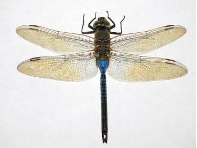
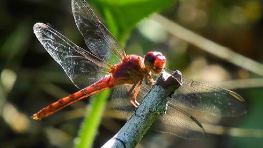
A dragonfly is a fast-flying, predatory insect belonging to the infraorder Anisoptera, known for its four transparent, independent wings and massive compound eyes that provide nearly 360-degree vision. They are among the world’s most successful hunters, with a capture rate of up to 97%. [1, 2]
Key Characteristics
- Aerial Predators: They hunt other flying insects like mosquitoes, flies, and even smaller dragonflies in mid-air.
- Exceptional Vision: Their eyes are composed of up to 30,000 individual lenses (ommatidia), allowing them to see in high-definition and detect movements far faster than humans.
- Fast & Agile: Some species can reach speeds of 30–36 mph. They can fly in six directions—up, down, forward, backward, and side-to-side—and even hover.
- Ancient Origins: They have existed for over 300 million years, predating dinosaurs. Prehistoric ancestors had wingspans as wide as 75 cm (2.5 feet). [1, 2, 3, 4, 5]
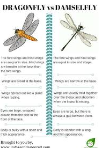
Dragonfly vs. Damselfly
While often confused, they can be distinguished by these features:
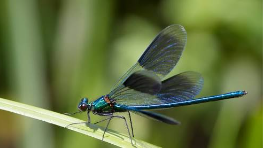
- Resting Posture: Dragonflies hold their wings out horizontally (like an airplane), whereas most damselflies fold them closed along their backs.
- Eye Position: Dragonfly eyes are huge and usually touch at the top of the head; damselfly eyes are smaller and separated.
- Body Shape: Dragonflies have shorter, bulkier bodies; damselflies are much thinner and more delicate. [1, 2, 3, 4, 5]
Life Cycle
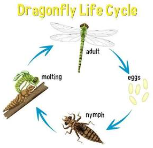
Dragonflies undergo incomplete metamorphosis (no pupal stage): [1, 2]
- Egg: Laid in or near water.
- Nymph (Naiad): The aquatic larval stage can last from several months to five years. They are fierce underwater predators that breathe through gills in their rectum.
- Adult: The winged adult lives for only a few weeks to months, focusing primarily on mating and laying eggs. [1, 2, 3, 4, 5, 6]
Would you like to know which specific species are common in your area, or are you interested in how to attract them to a garden pond?