
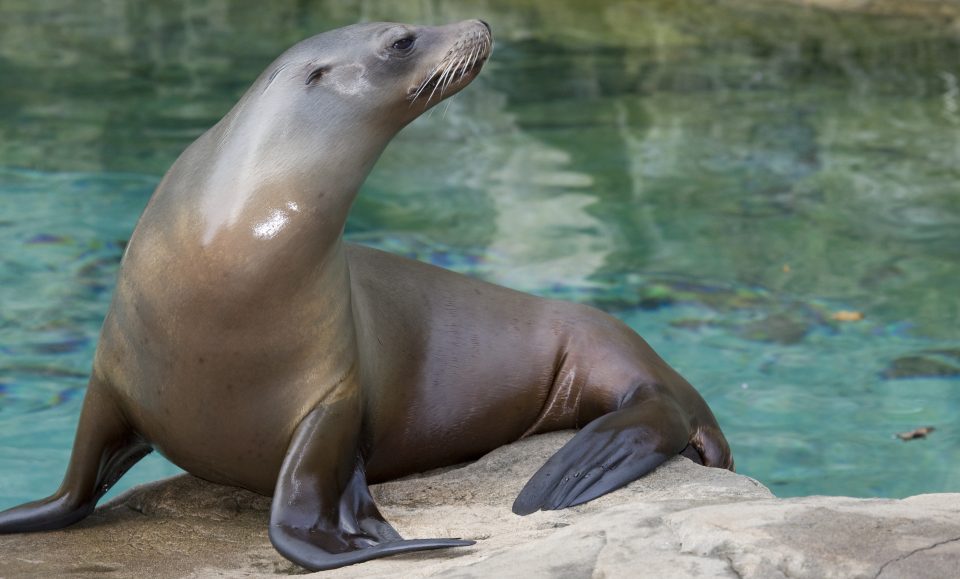
Sea lions are highly intelligent, playful, and noisy marine mammals belonging to the eared seal family, Otariidae. Found across the globe—from subarctic to tropical waters, with the notable exception of the Northern Atlantic Ocean—they are expertly adapted for a life alternating between long ocean swims and resting on rocky coastlines. [1, 2, 3, 4]
Key Characteristics & Adaptations
- Physical Attributes: They feature streamlined bodies, a blunt snout, a small tail, and short, coarse fur ranging from golden to dark brown. [1, 2, 3]
- Size Differences: They show extreme sexual dimorphism. Depending on the species, they range from the small Galápagos sea lion at 5 feet long up to the massive Steller sea lion which can exceed 10 feet and weigh up to 2,200 lbs (1,000 kg). Males are significantly larger and often develop a thick, protective mane around their necks. [1, 2, 3]
- Aquatic Prowess: They can dive to depths of over 200 metres to hunt and use their powerful front flippers to “fly” through the water at speeds up to 25–30 mph. Sensitive whiskers (vibrissae) help them pinpoint prey like fish, squid, and crustaceans in pitch-black waters. [1, 2, 3, 4, 5]
- Social Behaviour: Highly gregarious, they live in massive colonies on beaches or rocky shores. They communicate constantly using loud, distinctive barks, honks, and growls. [1, 2, 3]