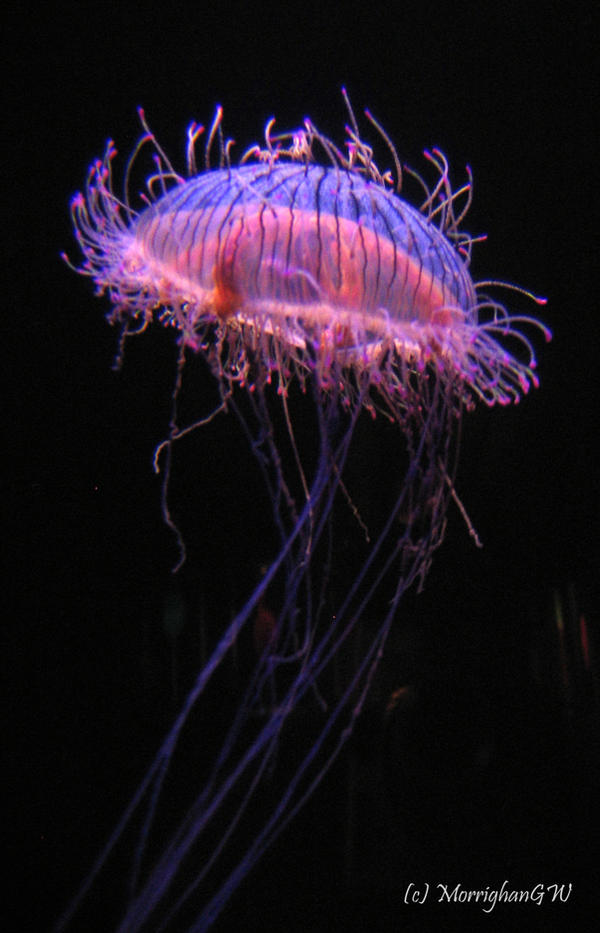
The flower hat jelly (Olindias formosus) is a visually striking species of hydromedusa. Although it closely resembles a true jellyfish, it actually belongs to the class Hydrozoa, whereas true jellyfish belong to the class Scyphozoa.
Key Characteristics & Behavior
- Distinct Appearance: It is famous for its translucent, pin-striped bell and brilliant, multi-coloured tentacles in neon shades of pink, purple, and lime green. When it is resting, it curls its tentacles upwards, making it look like an ornate, floral hat.
- Habitat: They are predominantly native to the northwestern Pacific Ocean, particularly around the coastal waters of southern Japan, though related populations have been found near South America (Argentina and Brazil). They typically spend most of their time hovering near the ocean floor.
- Diet: Their diet consists mainly of small fish and marine invertebrates.
- Sting Severity: While a sting from a flower hat jelly is not deadly to humans, it is highly venomous and intensely painful, often leaving a severe, irritating skin rash.
Because of their rare and beautifully fluorescent appearance, they are highly sought-after exhibits in major public aquariums, such as the Monterey Bay Aquarium.