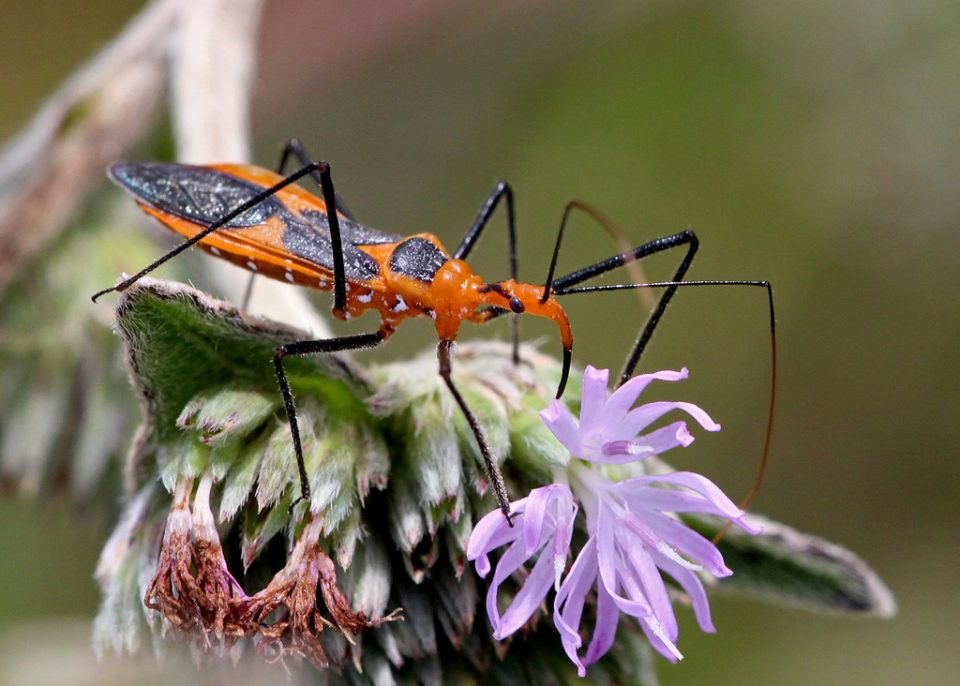
The assassin bug is a predatory insect belonging to the family Reduviidae, known for its stealthy hunting tactics and a unique, curved mouthpart used to liquefy and suck out the insides of its prey. [1, 2, 3]
Key Characteristics
- Physical Features: They typically have elongated, oval bodies with narrow heads and long, thin antennae. Most are dark-coloured (black or brown), but some species can be vibrantly orange, red, or yellow.
- The “Beak”: Their most distinctive feature is a sharp, three-segmented rostrum (beak). When not in use, it rests in a groove between their front legs.
- Venomous Saliva: To kill, they inject a toxic saliva that contains neurotoxins to paralyze the victim and enzymes that dissolve complex tissues.
- Global Presence: There are thousands of species found worldwide, including common types in the southern United States like the Wheel Bug and the Kissing Bug. [1, 2, 3, 4, 5]
Common Species & Their Risks
- Wheel Bug: North America’s largest assassin bug, named for the cog-like crest on its back. Its bite is considered more painful than a bee sting.
- Kissing Bug (Triatominae): Unlike most predatory assassin bugs, these feed on blood. They are famous for spreading Chagas disease through their faeces, which can be rubbed into the bite wound.
- Masked Hunter: Known for its nymphs that camouflage themselves by sticking dust and lint to their bodies. [1, 2, 3, 4, 5, 6]
Interaction with Humans
While beneficial for natural pest control in gardens, they can deliver a highly painful bite in self-defence if handled. Some species, like the Platymeris biguttatus, can even “spit” venom at eyes, causing temporary irritation or blindness. [1, 2, 3, 4, 5]
Are you looking for information on how to identify a specific bug you found, or are you interested in pest control?