
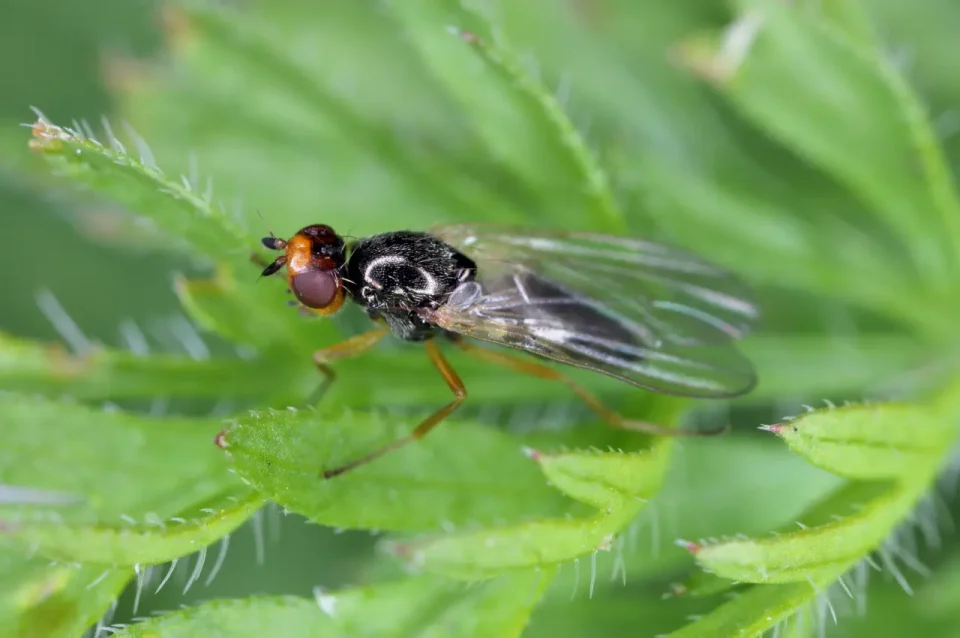
The carrot fly (Chamaepsila rosae, formerly Psila rosae) is a notoriously destructive agricultural and garden pest that primarily targets crops in the Apiaceae (umbellifer) family, including carrots, parsnips, celery, celeriac, and parsley. While the adult flies themselves do no direct harm to the plants, their larvae burrow into the roots, leaving ruined, inedible crops. [1, 2, 3, 4, 5]
🔍 Identification & Symptoms
- The Adult: A small, slender, shiny black fly measuring around 6–9 mm in length, featuring a distinct reddish head and pale orange-yellow legs. [1, 2]
- The Larva: Creamy-yellow, legless maggots that grow up to 10 mm long. [1, 2]
- Damage Signs: Early symptoms show as a reddish-scarlet or yellow discolouration and wilting of the outer leaves. Beneath the soil, the larvae mine tunnels just under the skin of the tap root, leaving behind rusty brown, dark crevices that frequently invite secondary bacterial rots. [1, 2, 3, 4]
🔄 Lifecycle & Vulnerability
Carrot flies typically emerge in two main generations per year (though a third can occasionally occur in late autumn): [1, 2]
- First Wave (Spring): Adults emerge from overwintered pupae between April and June. They are highly attracted to the specific aroma released by the host plants.
- Second Wave (Late Summer): A second flight occurs from August to October. [1, 2, 3, 4]
Female flies lay their eggs in soil crevices immediately around the base of the crops. The larvae hatch within roughly 7 days and instantly burrow down to feed on the root systems. Because carrot flies are notoriously weak fliers, they rarely rise higher than 50–60 cm above the ground and prefer to shelter in nearby hedges or long grass. [1, 2, 3, 4]
🛡️ Prevention and Control Strategies
Because chemical treatments are largely unavailable or ineffective once the larvae are inside the roots, prevention is essential. [1, 2]
- Physical Barriers (Highly Effective): Because the flies fly low, wrapping a 60 cm high fence made of clear polythene or micro-mesh around your carrot bed can block them. Alternatively, covering the crop entirely with standard Horticultural Fleece or Insect Netting (like Gardening Naturally’s Veggiemesh) pegged firmly to the ground provides airtight protection.
- Elevated Containers: Growing carrots in raised beds or pots that sit more than 60 cm off the ground naturally bypasses the fly’s low flight path.
- Sow Sparsely: The distinct “carroty” scent that attracts adult females is intensely released when the plants are bruised or thinned out. Sowing seeds thinly removes the need for later thinning. If you must thin your crop, do it on a windy day when the flies cannot navigate.
- Biological Control (Nematodes): Watering the soil with beneficial, microscopic worms like Steinernema nematodes (available from suppliers like Johnsons Seeds or Mr Fothergill’s) during the peak flight windows helps target and destroy eggs and larvae directly in the soil.
- Resistant Cultivars: Opt for selective varieties bred for their lower susceptibility, such as ‘Flyaway’, ‘Resistafly’, or ‘Sytan’. [1, 2, 3, 4, 5, 6, 7, 8]