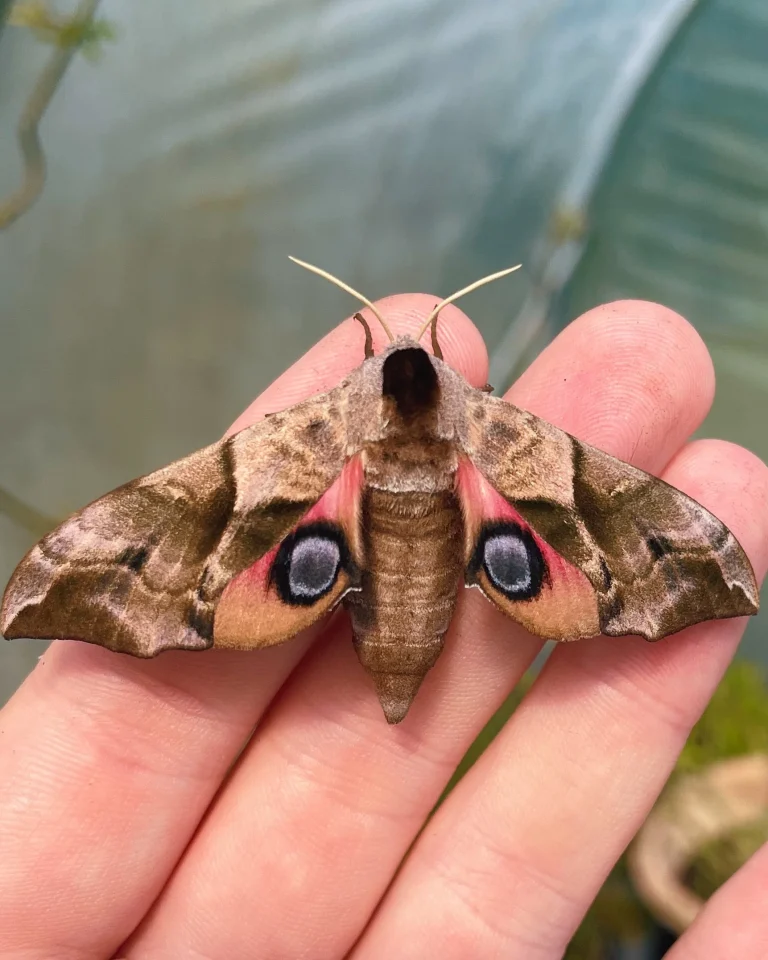
The Eyed Hawk-moth (Smerinthus ocellata or Smerinthus ocellatus) is a striking European moth belonging to the family Sphingidae. It is highly celebrated for its spectacular anti-predator defense mechanism and remarkable camouflage. [1]
Key Characteristics & Identification
- The “Eyes”: At rest, the moth looks like a drab, withered brown leaf. However, if disturbed or provoked, it flashes its hindwings to reveal large, vivid blue and black “eyespots” set against a pinkish-red background to startle potential predators like birds. [1, 2]
- Size: It is a large macro-moth, possessing a typical wingspan of 70–80 mm (though females can occasionally reach up to 100 mm). [1, 2]
- The Larva: The caterpillar is bright green, covered in white-tipped warts, and features seven oblique white stripes along its sides. It can be distinguished from the similar Poplar Hawk-moth caterpillar by its distinct grey-blue tail horn. [1, 2, 3]
Life Cycle & Habitat
- Adult Flight Period: Adults fly in a single generation from May to July. They fly at night and are frequently attracted to light traps. Interestingly, adult Eyed Hawk-moths do not feed at all during their short lifespan.
- Caterpillar Season: Caterpillars are active from June to September. They primarily feed on sallows, willows, and apple trees (making them a common guest in suburban orchards and gardens).
- Overwintering: In late summer, the fully grown caterpillar crawls down the host tree and pupates a few centimetres underground, overwintering as a glossy blackish-brown chrysalis.
- Distribution: They are fairly common and widely distributed across England, Wales, and Northern Ireland, becoming scarcer moving further north into Scotland. [1, 2, 3, 4]
You can track local sightings via the Butterfly Conservation Eyed Hawk-moth Guide or look up historical records on UKMoths. [1, 2]