
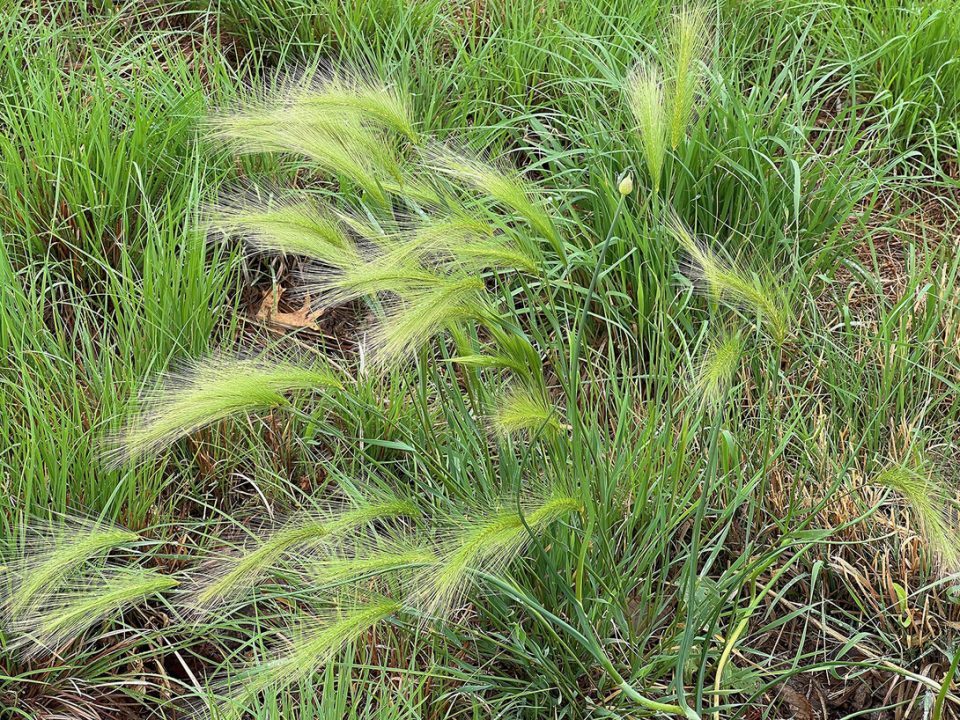
Foxtail grass refers to several species of wild, weedy grasses known for their bushy, spiked seed heads that closely resemble a fox’s tail. While some varieties are grown deliberately as beautiful ornamental landscape features or millets, certain wild species pose severe safety hazards to pets and livestock. [1, 2, 3, 4, 5]
Types of Foxtail Grass
The name is used across three primary plant genera: [1]
- Alopecurus (True Foxtails): Widespread temperate grasses including Meadow Foxtail (Alopecurus pratensis), often found in natural meadows and pastures. [1, 2]
- Setaria (Foxtail Millets): Summer annuals like Giant, Green, and Yellow foxtail. Some cultivars, like Setaria italica ‘Red Jewel’, are popular in gardens for their rich burgundy plumes. [1, 2]
- Hordeum (Foxtail Barley / Wild Barley): Highly adapted grasses like Hordeum jubatum, which feature long, swaying, feather-like bristles. [1, 2]
The Danger to Dogs and Pets
Wild foxtail grasses become exceptionally hazardous during late spring and summer as the plant dries out and turns from green to a golden-brown hue. [1, 2]
The seed heads break apart into sharp, arrow-like structures called diaspores or barbs. These barbs are unidirectionally textured—meaning they easily move forward but cannot move backward. When dogs walk through dried fields, these barbs can seamlessly burrow into their paws, ears, eyes, nostrils, or mouth. Because they cannot work their way out naturally, they can migrate deep inside a pet’s tissue, often requiring immediate veterinary care and surgical removal. [1, 2, 3]