AI Mode conversation: magpie moth
magpie moth
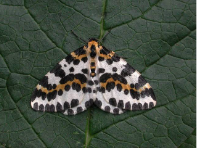
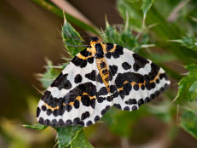
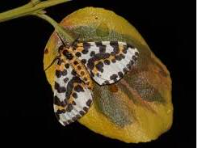
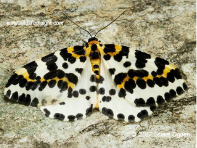
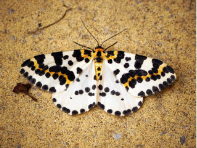
The magpie moth (Abraxas grossulariata) is a distinctive, medium-sized geometer moth native to the Palearctic realm and North America. It is well-known for its butterfly-like appearance and striking warning colours. [1, 2]
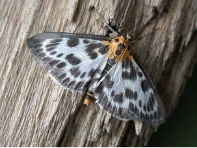
🦋 Appearance & Identification
- Wings: The wings are predominantly white, patterned with rows of prominent black spots and rows of bright yellow-orange cross-bands. They have a typical wingspan of 35–50 mm. [1, 2, 3]
- Body: The body features a bold yellow and black striped pattern. [1]
- Toxicity: Its flashy, high-contrast markings serve as an aposematic (warning) signal to predators that the moth is highly distasteful and toxic. While birds generally avoid them, web-building spiders that accidentally snare them will quickly cut them free and discard them. [1]
🌿 Habitat & Lifecycle
- Distribution: They are widespread across the UK, Europe, and parts of Asia.
- Habitat: Commonly found in gardens, allotments, hedgerows, woodlands, and heather moorlands.
- Flight Period: Adults are on the wing primarily during the summer months of July and August and are readily attracted to light sources at night.
- Caterpillars: The caterpillars match the adults in their bold white, black, and orange colour scheme. They overwinter on host plants from late August through June before pupating in late spring.
- Diet: Their primary food plants include currants and gooseberries (Ribes species)—earning them a historical reputation as garden pests—as well as blackthorn, hawthorn, hazel, and privet. [1, 2, 3, 4, 5]
🔍 Similar Species: The Small Magpie
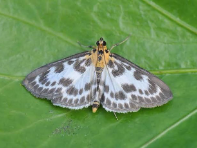
It is frequently confused with the small magpie moth (Anania hortulata). However, they belong to entirely different families: [1, 2]
- The Small Magpie is noticeably smaller (24–28 mm wingspan).
- It lacks the yellow bands on its wings, possessing yellow only on its head and thorax.
- Its caterpillars feed almost exclusively on common nettles rather than woody shrubs. [1, 2]
To explore more about this species, you can check data maps and records via the Butterfly Conservation Magpie Profile or learn about its regional ecology on The Wildlife Trusts.