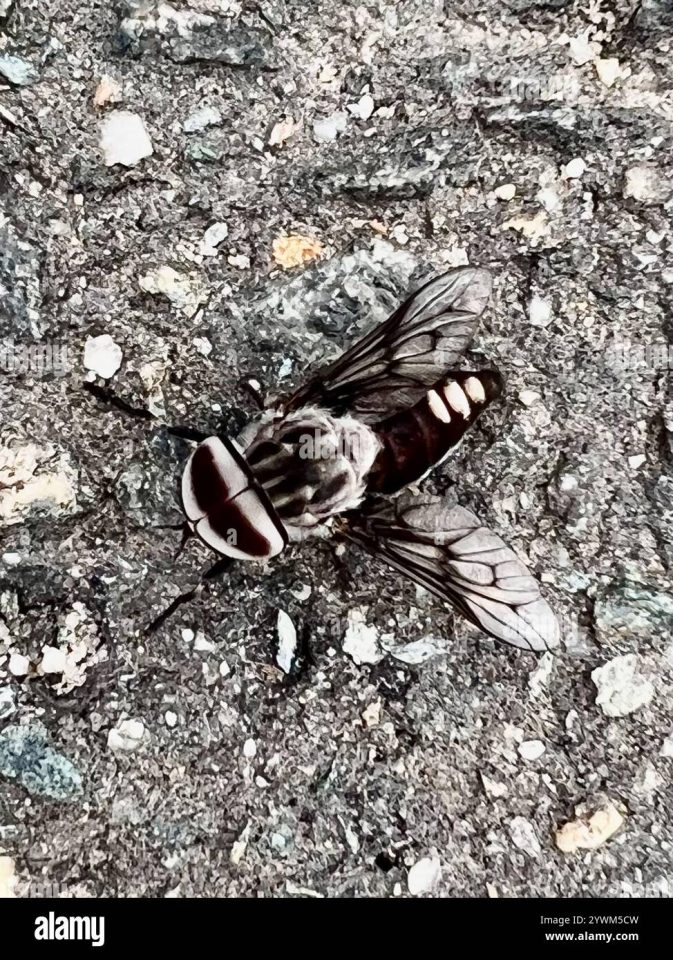
The term “Spotted Horse Fly“ most frequently refers to the White-spotted Horse Fly (Tabanus trimaculatus), a fast, powerful flier belonging to the insect family Tabanidae. [1, 2, 3]
Depending on your region, you might also be looking at the Three-spotted Horse Fly, the Narrow-winged Horse Fly (Tabanus maculicornis), or the heavily patterned Notch-horned Cleg (Haematopota pluvialis). [1, 2, 3]
Key Identification Features
- Distinct Markings: True to its name, the Tabanus trimaculatus species is easily recognized by three prominent, light white triangles down the centre of its dark abdomen. [1, 2]
- Eyes: They have large, striking compound eyes. In many related species, these eyes exhibit brilliant iridescent green or coppery tones with distinct purple bands. [1, 2, 3]
- Size and Wings: They are robust flies, typically presenting clear or lightly smoky wings, though some species in the same family (like Tabanus sulcifrons) feature heavily spotted wing patterns. [1, 2]
Behavior and Diet
- Who Bites? Only the females bite. They possess sharp, blade-like mandibles that slice the skin to feed on mammalian blood, which provides the necessary nutrients for egg production. [1, 2, 3, 4]
- Male Behavior: Males do not bite. They lack the mouthparts for feeding on blood and feed exclusively on nectar and plant sugars, making them beneficial pollinators. [1, 2, 3]