The European turtle dove (Streptopelia turtur) is a small, vibrant species of wild pigeon famous for its distinctive purring “turrr-turrr” call, from which its name is derived. Globally listed as Vulnerable, it is the only long-distance migratory dove species in Europe, flying over 5,000 kilometres annually to spend winters in sub-Saharan Africa. [1, 2, 3, 4]
Key Characteristics & Identification
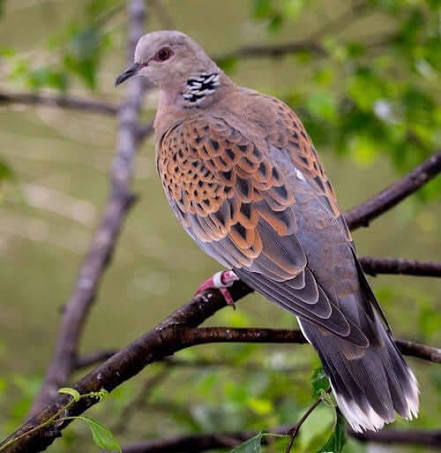
- Appearance: Daintier and darker than the common Eurasian collared dove. It features an orangey-brown and black tortoiseshell-patterned back, a blue-grey head, a pinkish chest, a bright red-orange eye ring, and a distinctive patch of black and white stripes on the side of its neck. [1, 2]
- Size: Measures roughly 25–28 cm in length with a wingspan of 45–55 cm, weighing approximately 130–180 grams. [1]
- Diet: Unlike many other birds, it feeds almost exclusively on the ground, searching for wildflower and weed seeds (such as fumitory, chickweed, and vetch) alongside agricultural grains. [1, 2]
Breeding & Lifecycle
Turtle doves return to their European breeding grounds in late spring (typically April or May). They form strong, monogamous pair bonds and mate for life, which has historically made them cultural symbols of devoted love and faithfulness. They construct fragile twig nests in dense, thorny hedgerows or scrubland, where both parents share the duties of incubating a typical clutch of two eggs and feeding the young “pigeon milk”. [1, 2, 3, 4, 5]
Conservation Status & Extinction Risks
The species is facing severe declines, especially in northwestern Europe. In the UK, it is a Red-listed priority species, having suffered a devastating 99% population collapse since the late 1960s, making it one of Europe’s fastest-declining birds. The primary drivers of this crisis include: [1, 2]
- Loss of suitable nesting habitats due to aggressive agricultural intensification.
- Scarcity of wild seed plants on modern farmland.
- Illegal poaching and legal overhunting along their autumn migration flyways. [1, 2]
Urgent recovery efforts, led by initiatives like Operation Turtle Dove, are actively working to restore feeding habitats, protect nesting sites, and carry out targeted captive-release programmes to establish strongholds and save the species from regional extinction. [1, 2]
Would you like to explore how you can support turtle dove conservation, or are you looking for tips on identifying its unique call versus other doves?
AI responses may include mistakes. Learn more
RSPBTurtle Dove Bird Facts | Streptopelia TurturUK Red-listed priority species; 99% decline since 1960s due to breeding food loss and migration flyway hunting.
The Wildlife TrustsTurtle dove | The Wildlife TrustsAdults feed on cereal and wildflower seeds, but feed their young ‘pigeon milk’ – a regurgitated, milky substance from a food-stora…
Operation Turtle DoveWhat is a Turtle Dove?Turtle Doves were once the UK’s fastest declining bird species and are listed as vulnerable on a global scale. Endangered Species)
Show all