
Trumpetfish (genus Aulostomus) are a family of highly specialized, elongated marine reef predators closely related to seahorses and cornetfishes. Named for their long, tubular snouts that resemble the mouthpiece of a trumpet, these masters of disguise are renowned for their unique stealth hunting tactics in tropical and subtropical waters worldwide. [1, 2, 3, 4]
Physical Characteristics
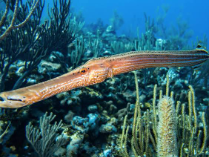
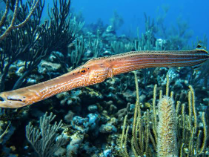
- Body Shape: Their bodies are long, thin, and cylindrical, typically growing between 20 to 30 inches (50 to 80 cm), though exceptional specimens can reach nearly 40 inches. [1, 2, 3]
- Flexible Jaws: Their jaws are supported by an elastic tissue system that expands rapidly into a circular hole roughly equal to the diameter of their body. [1, 2]
- Color Changing: Equipped with specialized pigment cells called chromatophores, they can rapidly shift colors between bright yellow, reddish-brown, green, and blue-grey to perfectly match their surroundings. [1, 2]
Stealth Hunting Tactics
Because trumpetfish are poor long-distance swimmers, they rely entirely on stealth to catch small fish and crustaceans: [1, 2]
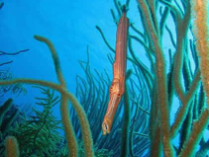
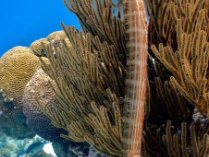
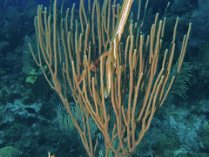
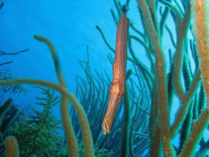
- Vertical Ambush: They float completely motionless in a vertical, head-down position among soft corals, gorgonians, or seagrass, blending in as part of the environment. [1, 2]
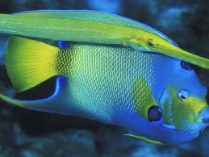
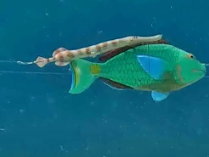
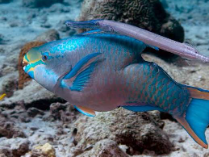
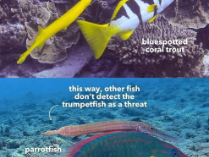
- Shadow Hunting: They will swim closely alongside larger, herbivorous fish (like parrotfish), using them as a moving blind to sneak close to unsuspecting prey. [1, 2]
- Suction (Pipette) Feeding: Once close enough, they open their mouths in milliseconds. This creates an extremely powerful vacuum vortex that draws the prey straight into their throat whole. [1, 2, 3]
Species & Distribution
There are three recognized species within the monogeneric family:
- Atlantic Trumpetfish (Aulostomus maculatus): Common across the Caribbean, Gulf of Mexico, and Florida.
- Chinese / Pacific Trumpetfish (Aulostomus chinensis): Found across the vast warm waters of the Indo-Pacific, from East Africa to Hawaii.
- Reef Trumpetfish (Aulostomus strigosus): Inhabits the coastal eastern Atlantic Ocean, notably around Macaronesia and West Africa. [1, 2, 3]
To see these camouflage tactics and unique suction-feeding mechanics in active underwater footage, you can watch this brief explanatory video:
Here is a closer look at the remarkable visual world of the trumpetfish, showcasing their incredible diversity in coloration and their famous stealth behaviors.
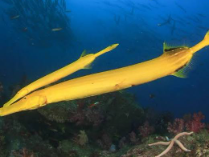


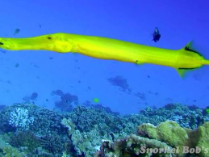


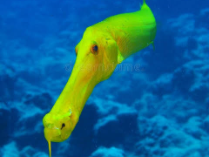
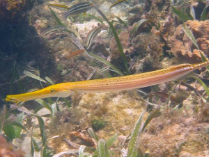
Vibrant Color Morphing
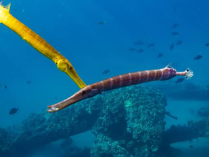
Trumpetfish are famous for their ability to shift colors rapidly using special pigment cells. The bright yellow morph (most commonly seen in the Chinese Trumpetfish across the Indo-Pacific) is an exact match for yellow tangs and certain sea whips, allowing them to blend into schools of herbivorous fish completely unnoticed.






Mastery of Camouflage
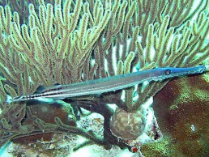
When blending into the reef structure, trumpetfish often assume a reddish-brown, blue-grey, or silver striped pattern. They hang vertically, head-down, perfectly mimicking the long stalks of sea whips and soft corals. This posture allows them to stay invisible to both the tiny reef fish they want to eat and the larger predators looking for them.







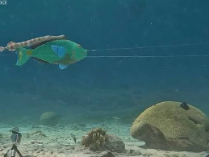
“Shadow Hunting” Behavior
Biologists have documented trumpetfish using other marine creatures as living camouflage blinds. By swimming flush against the sides of non-threatening, plant-eating fish like parrotfish or angelfish, the trumpetfish hides its own profile. As the larger fish grazes along the reef, the trumpetfish uses the distraction to get within striking distance of its prey.
3:59