
umbrella octopus
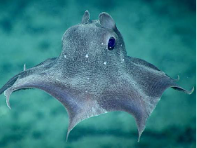
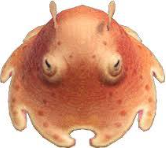
An umbrella octopus is a type of deep-sea cephalopod belonging to the family Opisthoteuthidae. They are best known for a web of skin that stretches between their tentacles, which gives them a distinct, umbrella-like appearance when their arms are fully flared or spread out. [1, 2]



🐙 Fascinating Facts About the Umbrella Octopus
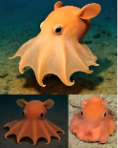
- The “Dumbo” Connection: The famous Dumbo Octopus (genus Grimpoteuthis) is actually a well-known type of umbrella octopus. They get this nickname from the ear-like fins on top of their heads that resemble Disney’s flying elephant. Another famous family member is the adorable, gelatinous flapjack octopus. [1, 2, 3]
- Abyssal Dwellers: These creatures live at incredible ocean depths, typically between 1,000 to 4,000 metres (3,300 to 13,000 feet) down in the dark, cold benthic zones of the seafloor. [1, 2, 3]
- Unique Movement: Unlike shallow-water octopuses that rely heavily on jet propulsion, umbrella octopuses use their ear-like fins to steer and swim. They also pulse their webbed arms in a slow, graceful rhythm that closely mimics the movement of a jellyfish. [1, 2, 3, 4]
- No Ink Sacs: Because they live in the pitch-black depths of the deep sea where ink wouldn’t serve as an effective visual distraction, umbrella octopuses completely lack ink sacs. [1, 2]
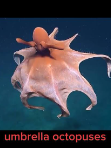
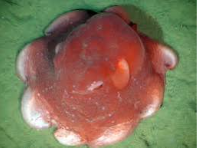
- Built-in Shield: When threatened, they employ a clever defensive stance. They stretch their webbed arms out as wide as possible and curve the tips downward toward the seafloor, ballooning out like an open umbrella to make themselves look larger and hide from predators. [1]
- Dietary Quirks: They have a degenerated radula (the scraping “tongue” found in most molluscs), meaning they cannot tear up their food. Instead, they hunt small crustaceans, snails, and worms on the muddy ocean floor and swallow their prey completely whole. [1, 2, 3]
Would you like to know more about a specific species like the Dumbo octopus or the flapjack octopus, or are you curious about how they manage to survive the extreme pressure of the deep ocean?