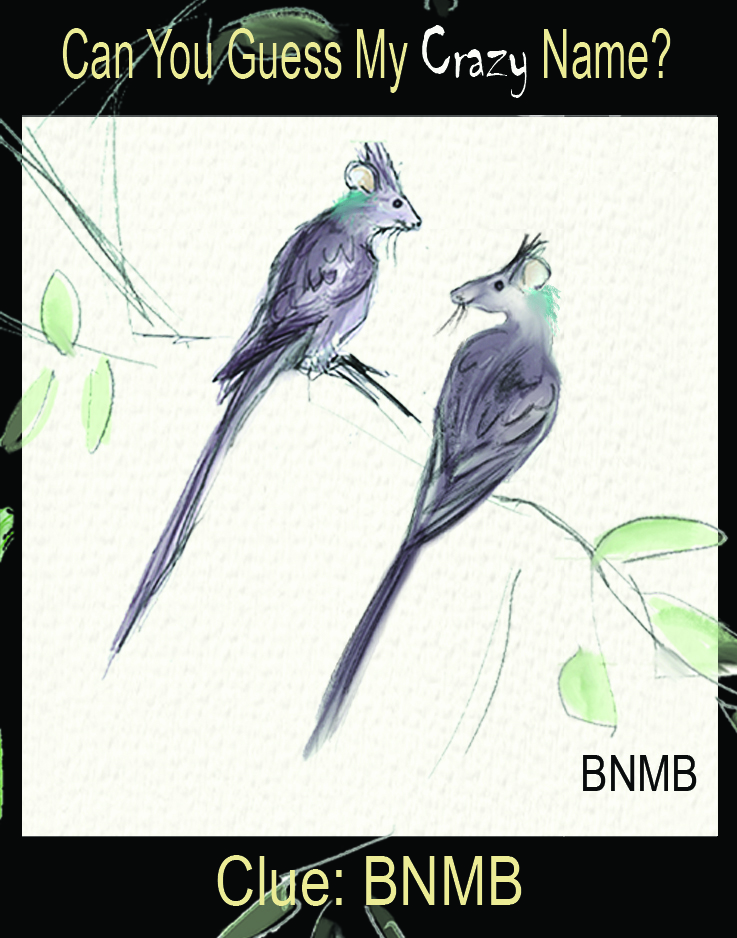
BNMB Blue Naped Mouse Birds

Mouse Birds Crazy Names Julain Williams Art

Mousebirds (family Coliidae, order Coliiformes) are a small, unique group of birds indigenous entirely to sub-Saharan Africa. They are considered “living fossils” because they are the only survivors of an ancient lineage that was vastly more diverse millions of years ago. [1, 2]

🧬 Why Are They Called “Mousebirds”?

They get their name from two distinct, highly unusual traits: [1]

  • Mouse-like movement: Instead of hopping or jumping like typical birds, they use their powerful legs to crawl, scurry, and scamper through thick foliage and branches exactly like rodents. [1, 2]
  • Fur-like appearance: Their bodies are covered in soft, fluffy, greyish-brown feathers that resemble hair or fur rather than standard bird feathers. [1, 2, 3]

🌟 Key Characteristics & Adaptations

  • Acrobatic Feet: Mousebirds have pamprodactyl feet, meaning they have reversible outer toes. They can rotate all four toes forward or backward, allowing them to seamlessly hang completely upside down to forage or even feed holding on with a single foot. [1, 2, 3, 4]
  • Distinct Body Shape: They are relatively small—typically about 10 cm in body length—but sport an incredibly long, rigid tail that spans an additional 20 to 24 cm. They also feature a distinct wispy crest on their heads. [1, 2]
  • Extreme Socialites: They are highly gregarious and travel in tight-knit flocks of about 20 birds. To conserve energy and stay warm during cold or rainy nights, the entire flock will bundle together in massive, tight huddles. [1, 2, 3, 4]
  • Solar-Powered Digestion: Their diet consists almost entirely of berries, fruits, and buds. To digest this heavy vegetation, they will hang upside down with their belly skin exposed to the sun, absorbing solar heat to jumpstart their digestive tract. [1, 2, 3]

🌍 The 6 Extant Species

There are only six surviving species of mousebirds in the world today: [1]

  1. Speckled Mousebird (Colius striatus)
  2. White-backed Mousebird (Colius colius)
  3. Blue-naped Mousebird (Urocolius macrourus)
  4. Red-faced Mousebird (Urocolius indicus)
  5. White-headed Mousebird (Colius leucocephalus)
  6. Chestnut-backed Mousebird (Colius castanotus) [1, 2]

Love Birds Card

Fran Evans Greeting Card

Love Birds card by Fran Evans

SKU: IF193

Fran Evans has worked closely with Two Bad Mice for over twenty years.  She lives in Wales with two children and is very well known for her book illustrations.

Two Bad Mice produce a wide variety of cards and gifts for Animal Lovers by contemporary Artists.   Fran’s cards are especially strong on images with badgers

Each card comes with an address label and coloured envelope

Birds and Blossom Washi Tape

Julian Williams washi tapes

Birds and Blossom Washi Tape by Julian Williams

1.5cm wide x 10 meters long

SKU: WJ101

Washi is a tearable, repositionable, decorative sticky tape made from natural plant fibres.  Washi was developed in Japan over 3 decades ago where they are very popular and  found in every high street store.  Customers use them for wrapping parcels, craft making and  decorating household items like iPhones.

See all Tapes Here


Splashbacks – Blue and White Birds

Garden Birds Splash Back by Julian Williams Artist

Blue & White Bird Tiles for Splashbacks

Showing all 7 results

Showing all 7 results

You could mix in some swans?

Showing all 6 results

Showing all 6 results

Permalink:https://shop.twobadmice.com/themes-plain-white-tiles/‎(opens in a new tab)Edit

Showing all 3 results

Showing all 3 results

MORE BLUE & WHITE SWAN PRODUCTS

Another range that would make good gifts for bird watchers are our blue and white ranges. One of the ranges features Mute Swans

Showing all 18 results

Showing all 18 results

Blue & White Garden Birds

Tableware for Bird Watchers

Our Blue and white birds range was developed by Julian Williams

These page links may be useful;

Off -the-Shelf Delft Tableware for Bird watchers and ornithologists

We have a limited range of blue and white china suitable as tableware for bird watchers

Showing all 4 results

Showing all 4 results

Bespoke services for Tableware and Tile Splash backs

For our off the shelf range we have only used two of the seven garden birds. Using the bespoke service we have seven options, and you can widen the selection further by mixing the garden birds with the swans.

Blue and white delft birds for birdwatchers

We are developing a bespoke service which will allow customers to make orders for these other designs. For instance if you combine the bird with tall mugs you get a set that will look like this. An ideal gift for a bird lover

Ideas for Bird watchers
Seven Tall Mugs available using our bespoke serice

There are draw backs to using the bespoke services

  • Products that are made to order will take a few weeks to reach you
  • The items are not gift boxed
  • There has to be a minimum order value of £120 plus postage

The birds can also be used for kitchen and bathroom splash backs. The transfers can be used to make all sorts of interesting patterns

Ceramics for birdwatchers

Lavender and Ladybirds Small Bowl

Small Lavender Bowl

Lavender and Ladybirds Small Bowl by Fran Evans

SKU: KBSF9

Small Sized Fine Bone China Bowls; Diameter 8.5 cm

They make popular gifts for garden lovers

Come with colourful gift boxes

The range are very collectible

Lavender and Ladybirds Medium Bowl

Lavender Bowl

 Lavender and Ladybirds Medium Bowl by Fran Evans

SKU: KBMF9

Diameter 11.8 cm :  Lavender & Ladybirds Medium Bone China Bowl by Fran Evans

They make popular gifts for Wild Flower and Nature lovers

Come with colourful gift boxes

The range are very collectible


Charming The Birds card

M271

Charming The Birds card by Anita Jeram

SKU: M271

Anita Jeram has worked closely with Two Bad Mice for over twenty years, She is very well known for her book illustrations, especially for the Little Nut Brown Hare painting from the classic bestselling children’s book “Guess How Much I Love You”.

Two Bad Mice produce a wide variety of cards and gifts for Cat Lovers and Animal Lovers by contemporary Artists.

Each card comes with an address label and coloured envelope

You may find these links interesting: Ideas for Cat Lovers

Anita Jeram

Merry Christmas Birds inserts

Merry Christmas Birds inserts – Folding inserts for use inside Two Bad Mice Cards

Instructions

Download the PDF
Print on an A4 sheet of paper
There are two inserts on each printed sheet; cut out each insert with a straight edge and sharp razor knife or scissors
Fold the inserts along the centre
Stick the insert on the inside of a Two Bad Mice card (a single dab of glue on one side is usually enough)

Every insert have areas where a personal hand written message can be added.

Feeding Birds In The Snow Insert

Feeding Birds In The Snow - Folding inserts for use inside Two Bad Mice Cards

Feeding Birds In The Snow – Folding inserts for use inside Two Bad Mice Cards

Instructions

Download the PDF
Print on an A4 sheet of paper
There are two inserts on each printed sheet; cut out each insert with a straight edge and sharp razor knife or scissors
Fold the inserts along the centre
Stick the insert on the inside of a Two Bad Mice card (a single dab of glue on one side is usually enough)

Every insert have areas where personal hand written message can be added.

Birds Pink Gift Wrap

Birds Pink Gift Wrap

Birds Pink Gift Wrap by Anita Jeram

SKU: GM02

1 sheet of giftwrap 40cm X 70cm

Pearlite paper (it has a glistening surface)

It is best to buy a mailing tube to avoiding folding

Birds Black Gift Wrap

Birds Black Gift Wrap

Birds Black Gift Wrap by Anita Jeram

SKU: GM03

1 sheet of giftwrap 40cm X 70cm

Pearlite paper (it has a glistening surface)

It is best to buy a mailing tube to avoiding folding

Birds Yellow Gift Wrap

Birds Yellow Gift Wrap

Birds Yellow Gift Wrap by Anita Jeram

SKU: GM04

1 sheet of giftwrap 40cm X 70cm

Pearlite paper (it has a glistening surface)

It is best to buy a mailing tube to avoiding folding

The Birds and the Bees Card

The Birds And The Bees Card by Anita Jeram

SKU: M156

Anita Jeram has worked closely with Two Bad Mice for over twenty years, She is very well known for her book illustrations, especially for the Little Nut Brown Hare painting from the classic best selling children’s book “Guess How Much I Love You”.

Two Bad Mice produce a wide variety of cards and gifts for Cat Lovers and Animal Lovers by contemporary Artists.

Each card comes with an address label and coloured envelope

You may find these links interesting: Ideas for Cat Lovers

Anita Jeram


ZF Zebra Finch

Zebra Finch crazy names Julian Williams

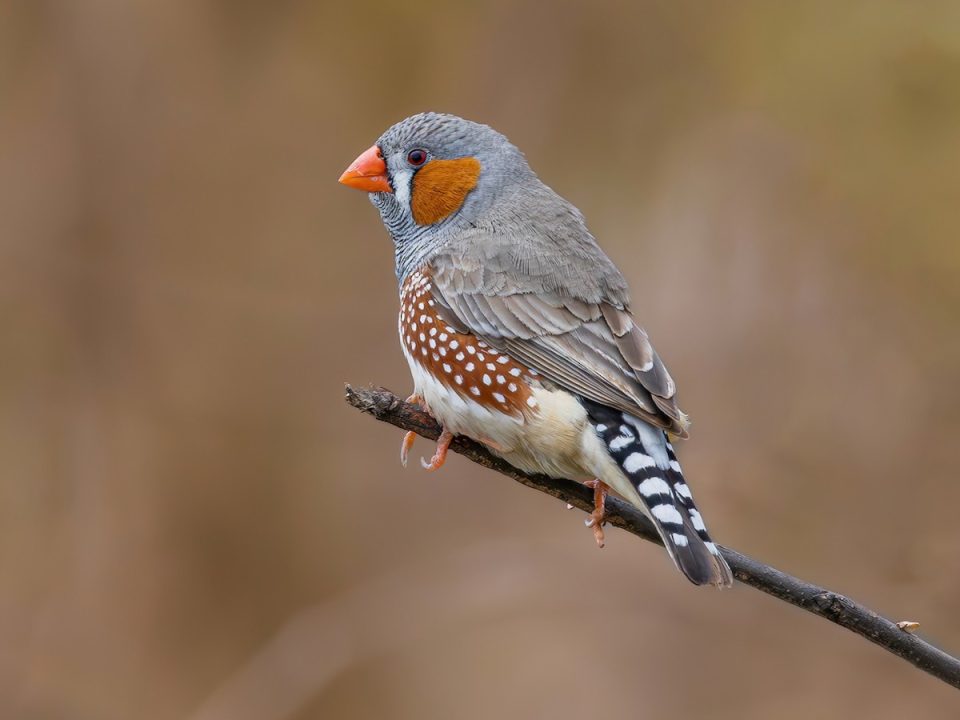
The zebra finch (Taeniopygia guttata) is a small, highly social songbird native to the arid grasslands of Australia and parts of Indonesia. Belonging to the Estrildid finch family, they are widely celebrated for their distinct, striped plumage, energetic personalities, and complex vocal abilities. Because they are hardy and prolific breeders, they have become one of the most popular starter birds for beginner enthusiasts and a crucial model organism for scientific research into vocal learning. [1, 2, 3, 4]

Key Characteristics & Behavior

  • Distinct Look: They grow to about 10–11 cm (4 inches) long. “Normal” males feature bright orange cheek patches, a black-and-white striped throat “bib,” and a deep red beak. Females are more muted grey with lighter orange beaks and lack the cheek patches. They both share the characteristic black-and-white barred tail that gives them their name. [1, 2, 3, 4]
  • Lifelong Pairs: Zebra finches are strictly monogamous and form intense, lifelong pair bonds. They maintain this connection through constant communication, proximity, and mutual preening. [1, 2]
  • Vocal Learners: Males learn complex, unique songs from their fathers and older mentors. Scientists frequently study them at institutions like the University of Oxford or the Max Planck Institute because they develop distinct regional “dialects” much like human language. [1, 2]
  • Social Flock Animals: In the wild, they travel in highly mobile nomadic flocks ranging from dozens to hundreds of birds. They prefer hopping and fluttering to long-distance flights, staying close to fresh water and food sources. [1, 2, 3]

Captive Care Essentials

If you are considering keeping zebra finches as pets, their baseline care is highly straightforward:

CategoryRequirement
HousingMust be kept in pairs or small groups to prevent severe loneliness. They require wide flight cages rather than tall cages so they have horizontal space to hop and fly.
DietHigh-quality finch seed mixes (millet, canary seed, grass seeds) supplemented daily with leafy fresh greens, vegetables, and occasional fruits.
LifespanWhile they only survive 2 to 3 years in the wild, they frequently live 5 to 10 years in captivity under optimal care.
BreedingHighly prolific breeders. If provided a nest box and nesting materials (like grass or coconut fiber), a pair will quickly produce clutches of 4 to 6 eggs.

You can find comprehensive health guidelines via the RSPCA Zebra Finch Care Guide or review nutritional insights from Lafeber Pet Birds to set up an ideal environment. [1, 2]

Are you researching zebra finches as a potential pet, or are you looking into their wild behaviors and biology? Let me know so I can provide the exact information or cage setup tips you need!

SB Secretary Bird

Secretary Bird Crazy Name Julian Williams

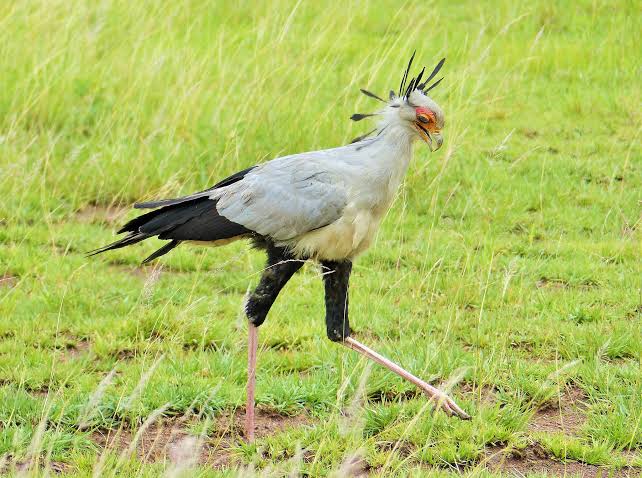
The secretary bird (Sagittarius serpentarius) is a unique, mostly terrestrial bird of prey endemic to the open grasslands and savannas of Sub-Saharan Africa. Standing up to 1.3 metres (4 ft 3 in) tall, it is famous for its crane-like legs, an elegant crest of black feathers that resembles 19th-century clerks carrying quill pens behind their ears, and its distinctively long eyelashes. [1, 2]

Unlike most other raptors, the secretary bird hunts almost exclusively on foot, walking up to 20 kilometres a day to flush out prey. [1, 2]

Key Characteristics & Behavior

  • Lethal Kicks: It is a renowned hunter of venomous snakes like cobras and puff adders. It delivers a powerful stomp with a force five times its own body weight. The impact takes just 15 milliseconds—faster than a human blink—instantly crushing the prey’s skull. [1, 2]
  • Physical Defense: Its lower legs are covered in thick, armor-like scales that protect it from venomous snakebites. When facing a snake, it spreads its large, 2.1-metre wingspan like a shield or cape to distract and misdirect the striking reptile. [1, 2, 3]
  • Varied Diet: While famous for fighting snakes, its diet is highly opportunistic, consisting mostly of insects (about 86%), alongside mice, lizards, crabs, and birds’ eggs. [1, 2]
  • Flight and Nesting: Despite spending its days on the ground, the secretary bird is an excellent flier. Pairs build large, flat nests at the very top of thorny acacia trees, where they roost safely at night. [1, 2]

The secretary bird is currently protected under African conservation laws but remains uncommon due to habitat loss and degradation. [1]

TD Turtle Dove

Turtle Dove Crazy Name Julian Williams
Turtle Dove Crazy names Julian williams

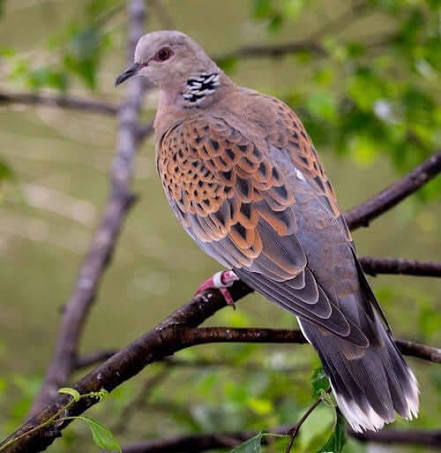
The European turtle dove (Streptopelia turtur) is a small, vibrant species of wild pigeon famous for its distinctive purring “turrr-turrr” call, from which its name is derived. Globally listed as Vulnerable, it is the only long-distance migratory dove species in Europe, flying over 5,000 kilometres annually to spend winters in sub-Saharan Africa. [1, 2, 3, 4]

Key Characteristics & Identification

  • Appearance: Daintier and darker than the common Eurasian collared dove. It features an orangey-brown and black tortoiseshell-patterned back, a blue-grey head, a pinkish chest, a bright red-orange eye ring, and a distinctive patch of black and white stripes on the side of its neck. [1, 2]
  • Size: Measures roughly 25–28 cm in length with a wingspan of 45–55 cm, weighing approximately 130–180 grams. [1]
  • Diet: Unlike many other birds, it feeds almost exclusively on the ground, searching for wildflower and weed seeds (such as fumitory, chickweed, and vetch) alongside agricultural grains. [1, 2]

Breeding & Lifecycle

Turtle doves return to their European breeding grounds in late spring (typically April or May). They form strong, monogamous pair bonds and mate for life, which has historically made them cultural symbols of devoted love and faithfulness. They construct fragile twig nests in dense, thorny hedgerows or scrubland, where both parents share the duties of incubating a typical clutch of two eggs and feeding the young “pigeon milk”. [1, 2, 3, 4, 5]

Conservation Status & Extinction Risks

The species is facing severe declines, especially in northwestern Europe. In the UK, it is a Red-listed priority species, having suffered a devastating 99% population collapse since the late 1960s, making it one of Europe’s fastest-declining birds. The primary drivers of this crisis include: [1, 2]

  • Loss of suitable nesting habitats due to aggressive agricultural intensification.
  • Scarcity of wild seed plants on modern farmland.
  • Illegal poaching and legal overhunting along their autumn migration flyways. [1, 2]

Urgent recovery efforts, led by initiatives like Operation Turtle Dove, are actively working to restore feeding habitats, protect nesting sites, and carry out targeted captive-release programmes to establish strongholds and save the species from regional extinction. [1, 2]

Would you like to explore how you can support turtle dove conservation, or are you looking for tips on identifying its unique call versus other doves?

AI responses may include mistakes. Learn more

  • RSPBTurtle Dove Bird Facts | Streptopelia TurturUK Red-listed priority species; 99% decline since 1960s due to breeding food loss and migration flyway hunting.
  • The Wildlife TrustsTurtle dove | The Wildlife TrustsAdults feed on cereal and wildflower seeds, but feed their young ‘pigeon milk’ – a regurgitated, milky substance from a food-stora…
  • Operation Turtle DoveWhat is a Turtle Dove?Turtle Doves were once the UK’s fastest declining bird species and are listed as vulnerable on a global scale. Endangered Species)

Show all

HLHF Hairy Legged Horse Fly

Hairy legged Horse Fly

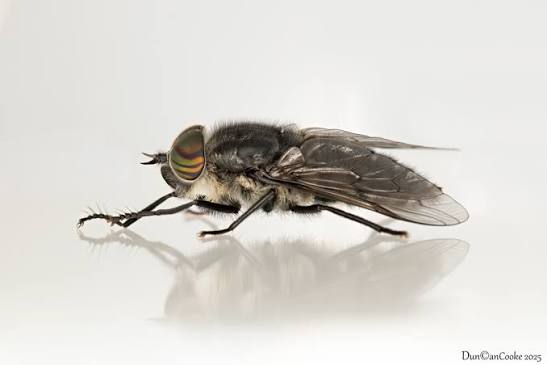
The Hairy-Legged Horsefly (Hybomitra bimaculata) is a medium-to-large true fly belonging to the family Tabanidae. Highly adapted to wet environments, this robust, summer-flying insect is widely known for its persistent nature and distinctive physical traits. [1, 2, 3]

🔍 Key Identification & Features

  • Size & Build: Adults typically measure between 13 to 16.5 mm in body length and feature a robust, honeybee-like structure. [1, 2]
  • The “Hairy” Legs: True to its name, this species features distinct long hair fringes on its middle and hind tibiae (shin segments). [1]
  • Striking Eyes: They possess large, hairy compound eyes that, in live specimens, often display three vibrant transverse bands or stripes. [1, 2]
  • Abdomen: The coloration is highly variable; the abdomen can range from entirely black to having prominent orange side patches on the first few segments. Conspicuous grey triangles run down the middle of its abdominal segments. [1, 2]

🌲 Habitat & Ecology

The Hairy-Legged Horsefly is predominantly active during the summer months (from May to August). It is most frequently spotted along woodland edges, wetlands, marshes, bogs, and fens. Geographically, it is widespread across southern Britain and Europe, becoming scarcer as you move into northern or upland regions. [1, 2, 3, 4]

Its predatory larvae develop in highly moist environments, growing within wet soil, waterlogged wood detritus, submerged leaf litter, and even inside the nests of waterbirds like swans. [1, 2]

🩸 Feeding Behavior & Bites

Like all horseflies, there is a stark division in diet between the sexes: [1]

  • Females: They require a substantial blood meal to develop their eggs successfully. Equipped with knife-like mouthparts, they slice open the skin of large mammals—primarily cattle, horses, and occasionally humans—to lap up the blood. Because they rely on visual motion and odors, they are strongly attracted to dark colors, moving objects, and specific chemical lures like cow urine. [1, 2, 3, 4, 5]
  • Males: Completely harmless to humans and livestock, males lack biting mouthparts. They sustain themselves exclusively on nectar, plant juices, and wet mud. [1, 2]

🩹 Managing Bites

A bite from a female Hairy-Legged Horsefly is notoriously painful and can result in a raised, red, and swollen area. If you or an animal are bitten: [1, 2]

  1. Clean the area: Wash thoroughly with soap and water to prevent any bacterial infection.
  2. Apply a cold compress: Use an ice pack or a cold cloth to minimize swelling and alleviate sharp pain.
  3. Soothe the itch: Utilize non-medicated options such as aloe vera. Refrain from scratching the bite, as breaking the skin introduces a risk of secondary infection.
    Note: In rare instances, individuals may experience severe allergic reactions (manifesting as dizziness or fluid-filled blisters), which require immediate medical evaluation. [1, 2]

For further details on mapping and sightings, check out the comprehensive species accounts on NatureSpot and browse further photographic data on Picture Insect.

DP Dalmatian Pelican

Dalmatian Pelican Crazy Name Julian Williams

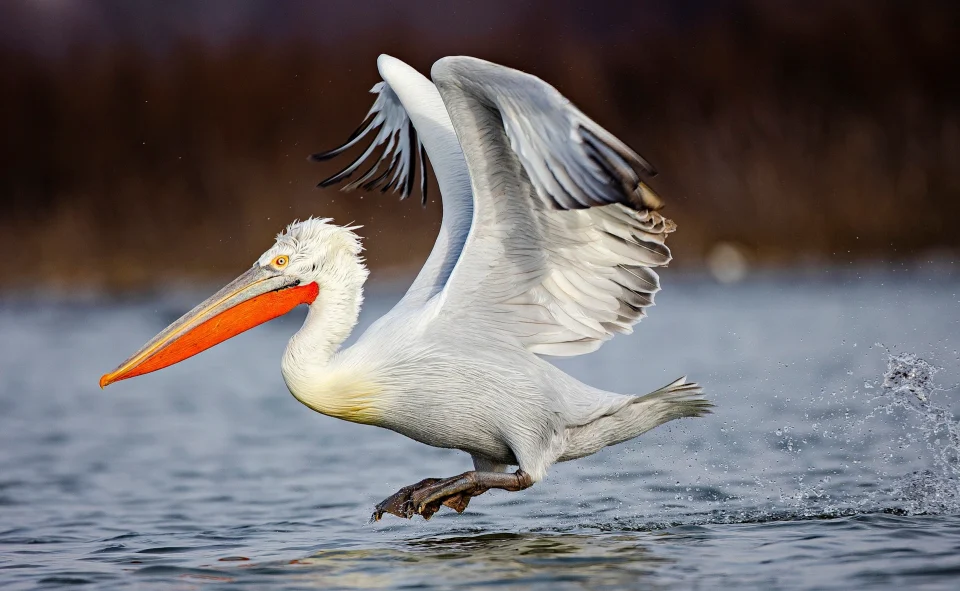
The Dalmatian pelican (Pelecanus crispus) is the largest pelican species in the world and ranks among the heaviest flying birds alive. Easily identifiable by its massive bill and “shaggy” appearance, it is a magnificent soaring waterbird native to the lakes and wetlands of Eurasia. [1, 2, 3]

Physical Profile

  • Size & Weight: They typically weigh between 10 to 15 kg (22 to 33 lbs) and feature an impressive wingspan stretching 2.7 to 3.5 metres (8.8 to 11.5 feet). [1, 2, 3]
  • Distinctive Features: They are known for a diagnostic curly crest of feathers on the nape of their neck. They possess a pale grey iris and an enormous bill measuring 37 to 45 cm long. [1, 2]
  • Breeding Colours: While their overall plumage is a silvery, dirty white, their expandable gular (throat) pouch turns a striking bright orange-red during the breeding season. [1, 2, 3]

Habitat & Diet

These giant birds thrive primarily in freshwater wetlands, shallow lakes, marshes, and river deltas. They feed almost exclusively on fish. Dalmatian pelicans are famous for their cooperative surface fishing, where a group will gather to encircle schools of fish in shallow water and drive them toward the shore to be easily scooped up in their 12-litre throat pouches. [1, 2, 3, 4]

Distribution & Conservation

  • Range: Their breeding range stretches across southeastern Europe (such as Greece’s Lake Kerkini and the Danube Delta) into central Asia and Russia. They migrate short distances to ice-free waters in places like India or Egypt during the winter. [1, 2, 3, 4, 5]
  • Status: Classified as Near Threatened by the IUCN. While conservation projects like the European-led Pelican Way of LIFE initiative have successfully helped populations recover in Europe by building nesting platforms and marking power lines, global numbers remain vulnerable due to wetland drainage, pollution, and human disturbance. [1, 2, 3, 4]

Cattle Egret crazy name Julian Williams
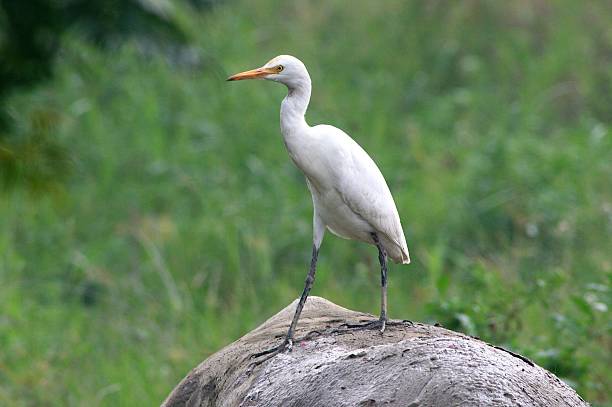
Cattle egret standing on a cow’s back

The cattle egret (Bubulcus ibis) is a small, compact white heron famous for its symbiotic, commensal relationship with large livestock and grazing mammals. Unlike most other herons that stick closely to water, this adaptable bird is primarily an upland species found in dry pastures, grasslands, and farmlands. It has achieved one of the most rapid and expansive natural geographic range expansions of any bird species in history. [1, 2, 3, 4, 5]

🔍 Key Physical & Field Identification

  • Size & Build: It is relatively small (45–50 cm in length, with a 300–400 g weight). It is smaller and stockier than a little egret, presenting a hunched posture, a shorter neck, a thick “jowl,” and a heavy head.
  • Plumage: Outside of the breeding season, they are completely white with a yellow bill and yellow-greyish legs.
  • Breeding Colors: During the breeding season, adults develop striking buff-orange or ochre plumes across their crown, breast, and back. [1, 2, 3, 4, 5]

🌾 Diet and Behaviour

  • Livestock Foraging: They frequently stand or walk directly alongside (or even on top of) cattle, sheep, horses, and wild grazing mammals. They capture grasshoppers, crickets, flies, worms, and small vertebrates that are flushed out of the grass by the heavy animals. [1, 2, 3, 4]
  • Pest Removal: They also pick ticks and flies directly from the bodies of livestock. This helps keep the animals clean, though they have occasionally been linked to spreading tick-borne diseases. [1, 2]
  • Nesting: They are highly gregarious, nesting in dense, noisy colonies in low trees or shrubs, often alongside other species of wading birds. [1, 2]

🌍 Distribution and Global Range Expansion

Originally native to parts of Asia, Africa, and southwestern Europe, the cattle egret has dramatically expanded its range over the last century. It naturally crossed the Atlantic to colonize the Americas in the early 1900s. Supported by a rise in human livestock farming and climate change, it has also steadily expanded its footprint northward into Europe. In the UK, it was once a rare visitor but has been a scarce breeding resident since 2008, with populations slowly expanding through southern Britain and Ireland. [1, 2, 3, 4]

EHM Eyed Hawk Moth

Eyed Hawk Moth Julian Williams Art Crazy names
eyed hawk moth

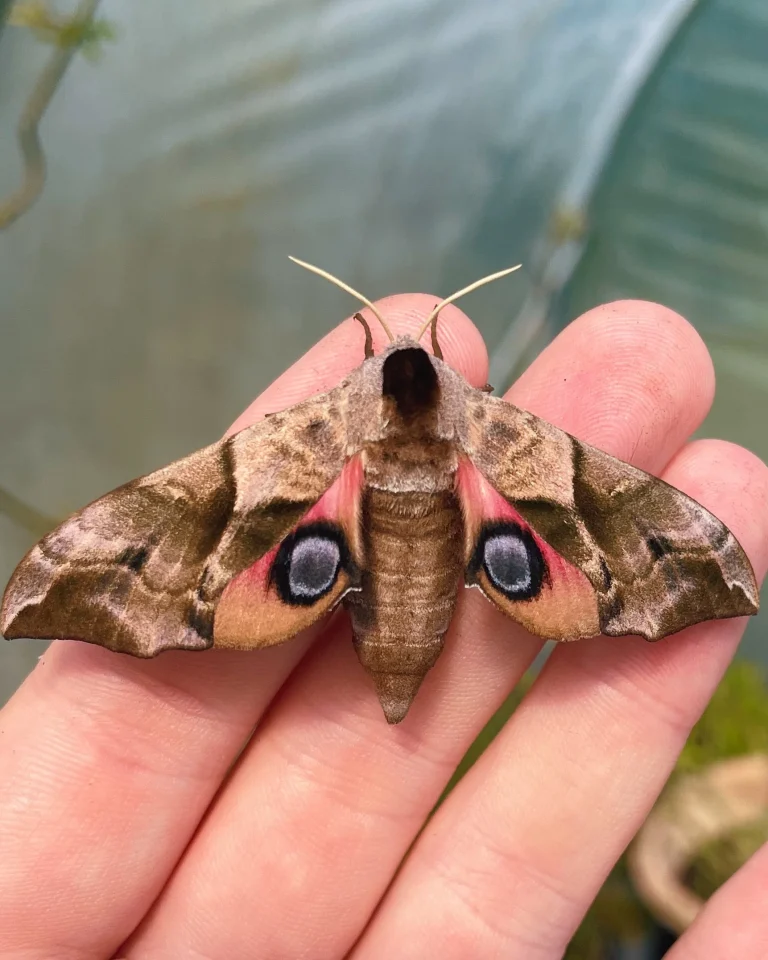
The Eyed Hawk-moth (Smerinthus ocellata or Smerinthus ocellatus) is a striking European moth belonging to the family Sphingidae. It is highly celebrated for its spectacular anti-predator defense mechanism and remarkable camouflage. [1]

Key Characteristics & Identification

  • The “Eyes”: At rest, the moth looks like a drab, withered brown leaf. However, if disturbed or provoked, it flashes its hindwings to reveal large, vivid blue and black “eyespots” set against a pinkish-red background to startle potential predators like birds. [1, 2]
  • Size: It is a large macro-moth, possessing a typical wingspan of 70–80 mm (though females can occasionally reach up to 100 mm). [1, 2]
  • The Larva: The caterpillar is bright green, covered in white-tipped warts, and features seven oblique white stripes along its sides. It can be distinguished from the similar Poplar Hawk-moth caterpillar by its distinct grey-blue tail horn. [1, 2, 3]

Life Cycle & Habitat

  • Adult Flight Period: Adults fly in a single generation from May to July. They fly at night and are frequently attracted to light traps. Interestingly, adult Eyed Hawk-moths do not feed at all during their short lifespan.
  • Caterpillar Season: Caterpillars are active from June to September. They primarily feed on sallows, willows, and apple trees (making them a common guest in suburban orchards and gardens).
  • Overwintering: In late summer, the fully grown caterpillar crawls down the host tree and pupates a few centimetres underground, overwintering as a glossy blackish-brown chrysalis.
  • Distribution: They are fairly common and widely distributed across England, Wales, and Northern Ireland, becoming scarcer moving further north into Scotland. [1, 2, 3, 4]

You can track local sightings via the Butterfly Conservation Eyed Hawk-moth Guide or look up historical records on UKMoths. [1, 2]

LB Lyre Bird

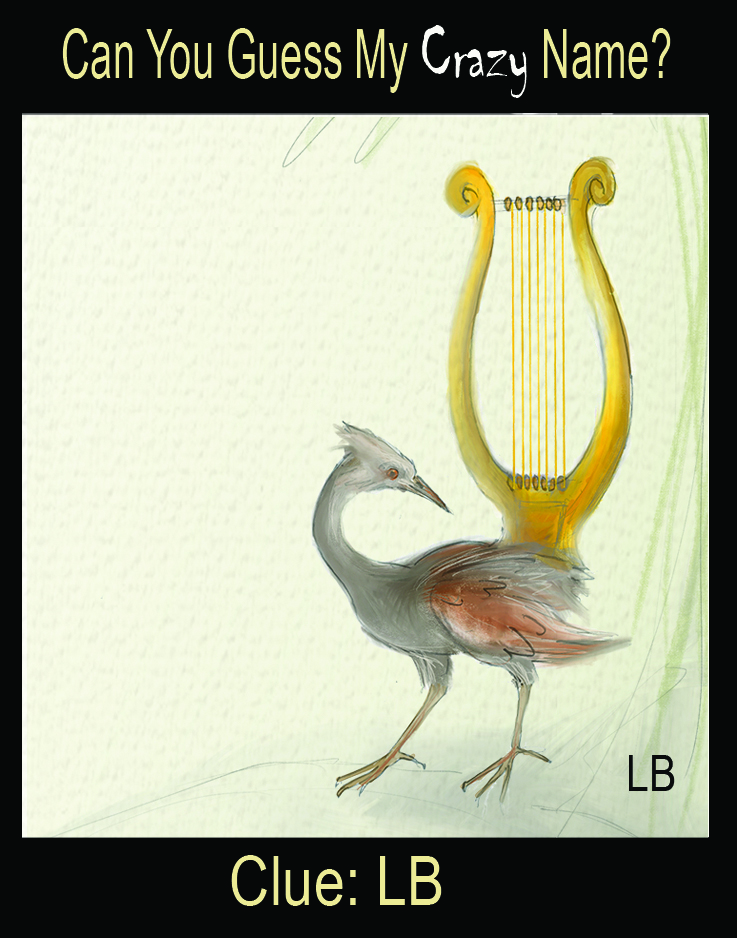
Lyre Bird crazy names Julian Williams

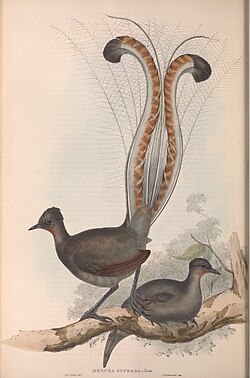
The lyrebird is an ancient genus of ground-dwelling Australian songbirds renowned for their unparalleled ability to mimic natural and mechanical sounds. Belonging to the family Menuridae and genus Menura, they are native to the rainforests and wet woodlands of southeastern Australia. [1, 2, 3]

The Two Species

  • Superb Lyrebird (Menura novaehollandiae): The most famous and widely distributed species. Males feature the spectacular, 16-plume tail that fans over the head during courtship displays, taking the distinct shape of an ancient Greek musical instrument called a lyre. [1, 2, 3]
  • Albert’s Lyrebird (Menura alberti): A less common and much less showy species restricted to a small area of rainforest on the border of New South Wales and Queensland. [1]

Key Characteristics

FeatureDescription
Vocal MimicryEquipped with a highly evolved syrinx (vocal organ), they flawlessly replicate other bird species, forest mammals, and human sounds like chainsaws, car alarms, camera shutters, and crying babies.
Physical DisplayDuring courtship, males construct small mounds of dirt, clear a stage, and perform an intricate song-and-dance routine, shimmering their ornate tail feathers forward like a canopy over their head.
Diet & ForagingThey are ground-dwelling insectivores. Using large, powerful claws, they scratch through leaf litter to dig up earthworms, beetles, spiders, and other invertebrates.
Flight HabitsLyrebirds are predominantly terrestrial and poor fliers. They generally run to escape danger or scale trees by leaping upwards from branch to branch.

For more specific information, you can read the comprehensive overview on the Wikipedia Lyrebird Entry.

Lyre Bird Crazy Names

MM Magpie Moth

Magpie Moth

AI Mode conversation: magpie moth

magpie moth

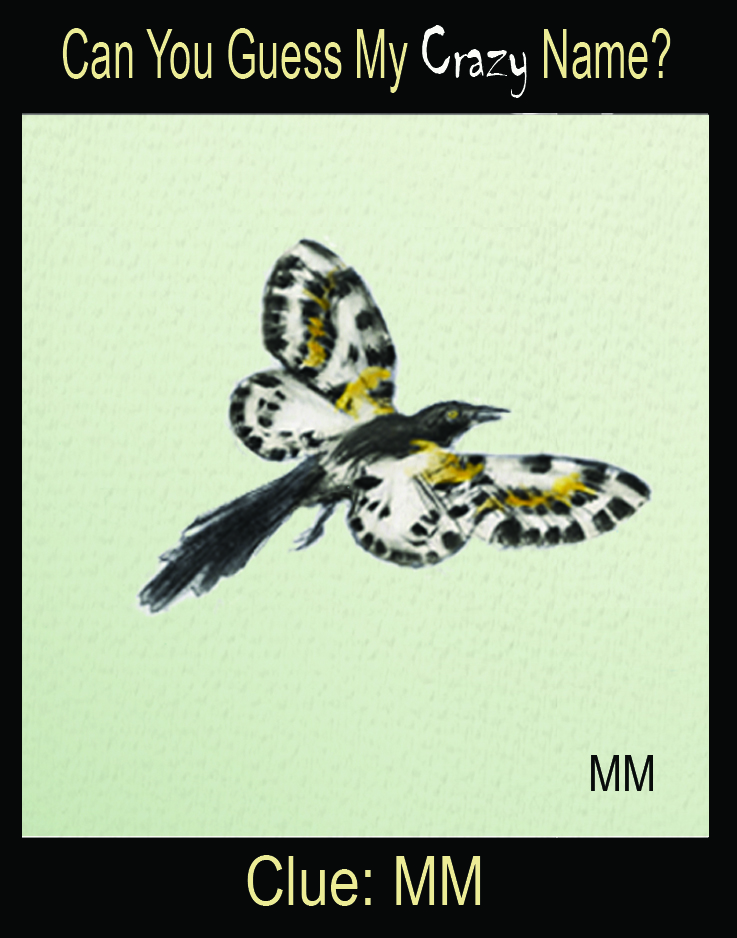
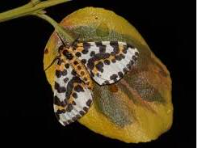
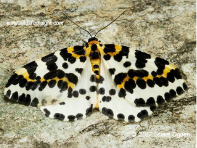
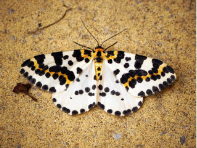
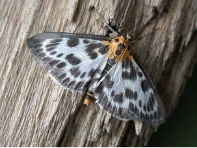
The magpie moth (Abraxas grossulariata) is a distinctive, medium-sized geometer moth native to the Palearctic realm and North America. It is well-known for its butterfly-like appearance and striking warning colours. [1, 2]

🦋 Appearance & Identification

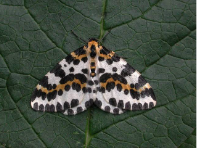
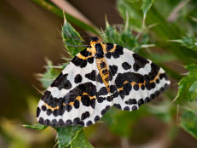
  • Wings: The wings are predominantly white, patterned with rows of prominent black spots and rows of bright yellow-orange cross-bands. They have a typical wingspan of 35–50 mm. [1, 2, 3]
  • Body: The body features a bold yellow and black striped pattern. [1]
  • Toxicity: Its flashy, high-contrast markings serve as an aposematic (warning) signal to predators that the moth is highly distasteful and toxic. While birds generally avoid them, web-building spiders that accidentally snare them will quickly cut them free and discard them. [1]

🌿 Habitat & Lifecycle

  • Distribution: They are widespread across the UK, Europe, and parts of Asia.
  • Habitat: Commonly found in gardens, allotments, hedgerows, woodlands, and heather moorlands.
  • Flight Period: Adults are on the wing primarily during the summer months of July and August and are readily attracted to light sources at night.
  • Caterpillars: The caterpillars match the adults in their bold white, black, and orange colour scheme. They overwinter on host plants from late August through June before pupating in late spring.
  • Diet: Their primary food plants include currants and gooseberries (Ribes species)—earning them a historical reputation as garden pests—as well as blackthorn, hawthorn, hazel, and privet. [1, 2, 3, 4, 5]

🔍 Similar Species: The Small Magpie

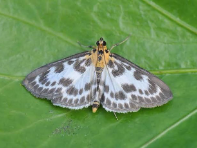
It is frequently confused with the small magpie moth (Anania hortulata). However, they belong to entirely different families: [1, 2]

  • The Small Magpie is noticeably smaller (24–28 mm wingspan).
  • It lacks the yellow bands on its wings, possessing yellow only on its head and thorax.
  • Its caterpillars feed almost exclusively on common nettles rather than woody shrubs. [1, 2]

To explore more about this species, you can check data maps and records via the Butterfly Conservation Magpie Profile or learn about its regional ecology on The Wildlife Trusts.

Magpie Moth

Kingfisher

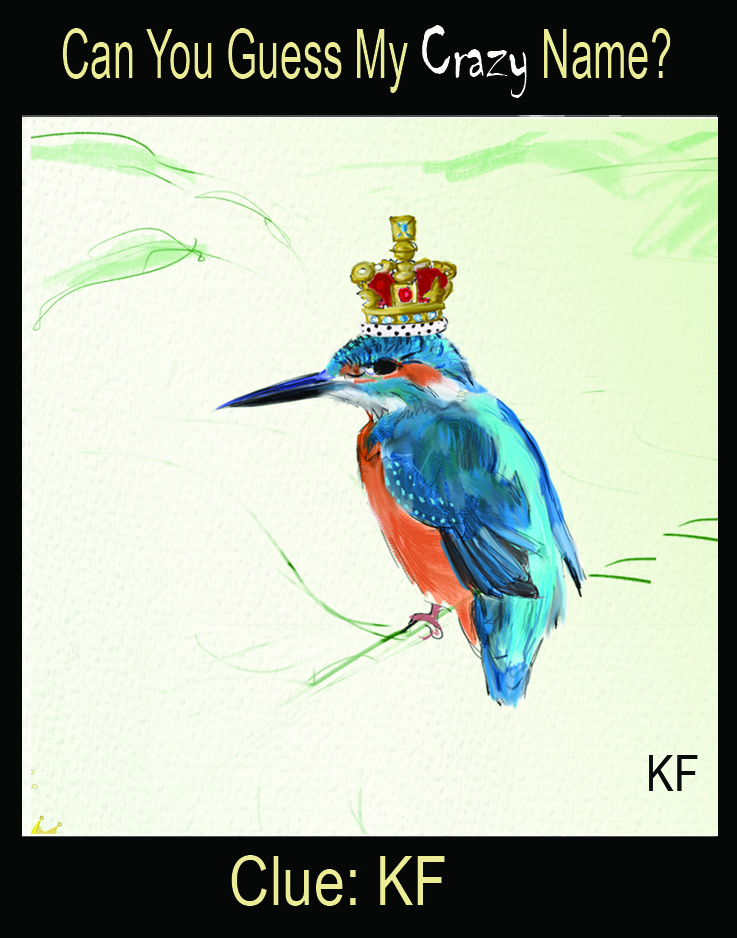
Crazy Name Kingfisher Julian Williams
kingfisher - my crazy name

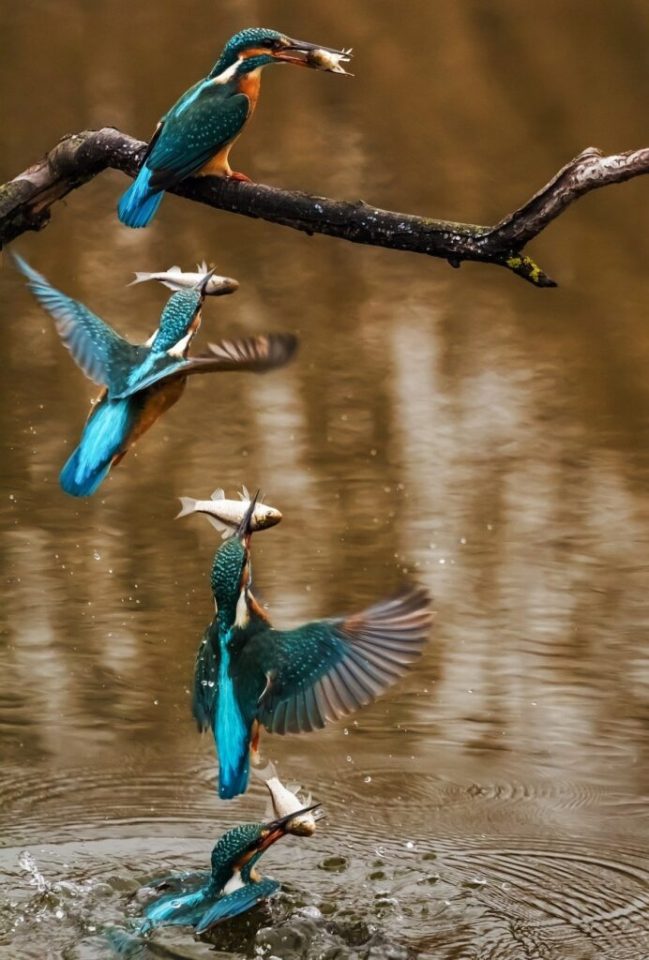
Kingfishers are a family of small to medium-sized, brightly coloured birds known for their long, sharp bills and exceptional fishing skills.

  • Diet: While many species dive into the water to catch fish, others eat insects, amphibians, and small reptiles.
  • Key Species: Well-known varieties include the Common Kingfisher, the Belted Kingfisher, and the Australian Kookaburra.

Black Eared Cat Bird

The Black-eared Catbird (Ailuroedus melanotis) is a striking emerald-green bowerbird found in the rainforests of New Guinea and northern Queensland, Australia. It is named for its distinctive black ear patch and its vocalizations, which sound remarkably like a cat’s wailing or yowling. [1, 2, 3, 4]

Key Characteristics

  • Appearance: It has bright green upperparts, a thick ivory-colored bill with a hooked tip, and dark red eyes. Its underparts are typically pale green or olive with heavy scalloping or spotting.
  • Behavior: Unlike most bowerbirds, catbirds do not build elaborate bowers to attract mates. They are monogamous and build simple cup-shaped nests.
  • Diet: They primarily forage for fruit and large arthropods in the middle and upper stories of the rainforest canopy. [1, 2, 3, 4, 5]

Handsome, My Dog Is… Notebook

Anita Jeram notebook

Handsome, My Dog Is… Notebook with Envelope by Anita Jeram

These notebooks have  64 pages and can be sent as a gift or thank you card.

The pages can be ripped out, like a shopping list or telephone pad.

Every page is uniquely illustrated with pictures of  European birds, butterflies and plants.

The back of the notebook includes an introductory text telling the reader interesting facts about of the butterfly/bird illustrated on the front cover

SKU: SNB6M03


Radiant, My Dog Is… Notebook

Anita Jeram Notebook

Radiant, My Dog Is… Notebook with Envelope by Anita Jeram

These notebooks have  64 pages and can be sent as a gift or thank you card.

The pages can be ripped out, like a shopping list or telephone pad.

Every page is uniquely illustrated with pictures of  European birds, butterflies and plants.

The back of the notebook includes an introductory text telling the reader interesting facts about of the butterfly/bird illustrated on the front cover

SKU: SNB6M01


Sociable, My Dog Is… Notebook

Anita Jeram Notebook

Sociable, My Dog Is… Notebook with Envelope by Anita Jeram

These notebooks have  64 pages and can be sent as a gift or thank you card.

The pages can be ripped out, like a shopping list or telephone pad.

Every page is uniquely illustrated with pictures of  European birds, butterflies and plants.

The back of the notebook includes an introductory text telling the reader interesting facts about of the butterfly/bird illustrated on the front cover

SKU: SNB6M02


Sweet, ABC of Cats Notebook

Anita Jeram Notebook

Sweet, ABC of Cats Notebook with Envelope by Anita Jeram

These notebooks have  64 pages and can be sent as a gift or thank you card.

The pages can be ripped out, like a shopping list or telephone pad.

Every page is uniquely illustrated with pictures of  European birds, butterflies and plants.

The back of the notebook includes an introductory text telling the reader interesting facts about of the butterfly/bird illustrated on the front cover

SKU: SNB6M06


Canary, ABC of Cats Notebook

Anita Jeram Notebook

Canary , ABC of Cats Notebook with Envelope by Anita Jeram

These notebooks have  64 pages and can be sent as a gift or thank you card.

The pages can be ripped out, like a shopping list or telephone pad.

Every page is uniquely illustrated with pictures of  European birds, butterflies and plants.

The back of the notebook includes an introductory text telling the reader interesting facts about of the butterfly/bird illustrated on the front cover

SKU: SNB6M05


Kiss, ABC of Cats Notebook

Kiss, ABC of Cats Notebook with Envelope by Anita Jeram

These notebooks have  64 pages and can be sent as a gift or thank you card.

The pages can be ripped out, like a shopping list or telephone pad.

Every page is uniquely illustrated with pictures of  European birds, butterflies and plants.

The back of the notebook includes an introductory text telling the reader interesting facts about of the butterfly/bird illustrated on the front cover

SKU: SNB6M04


Herons Card

Herons  Ardea cinera Card

SKU: B57

Greeting card with coloured envelope featuring birds and butterflies

These Bird cards are part of our Nature Notes Series

These cards include an introductory text on the back of the cards.


Know your Tits Bird Notebook with Envelope

Know Your Tits Julian Williams artist

Know your Tits Bird Nature Notebook with Envelope by Julian Williams

These notebooks have  64 pages and can be sent as a gift or thank you card.

The pages can be ripped out, like a shopping list or telephone pad.

Every page is uniquely illustrated with pictures of  European birds, butterflies and plants.

The back of the notebook includes an introductory text telling the reader interesting facts about of the butterfly/bird illustrated on the front cover

SKU: SNB6B42

These bird notebooks are part of our Nature Notes Series

These cards include an introductory text on the back of the cards.  TEXT written on the back of this card reads:

Know Your Tits

Blue Tits are small acrobatic birds with pretty blue caps. They are very common visitors to the bird table

Great Tits are one of the largest tits easily identified by the black bibs that run in a thick black stripe over their bright yellow breasts.  In spring they have distinctive loud song and can often be seen singing high in the trees.

Long Tailed Tits are very social birds almost always seen in larger groups.  They will only visit the bird table if you put out suet balls

Marsh Tits and Willow tits.  These two species have black caps and look almost identical to each other.  Experienced birdwatchers separate the species by their call and wing stripes.  They are occasional visitors to bird tables

Coal Tits are identified by the white stripes that run down the nape of their necks.

Crested Tits live in pine forests. They have a widespread distribution in Europe, but in Britain are only found in Scotland


Orange Tips Butterfly Notebook with Envelope

Orange Tips Julian Williams artist Anthocharis cardamines

Orange Tips Butterfly Notebook with Envelope by Julian Williams

These notebooks have  64 pages and can be sent as a gift or thank you card.

The pages can be ripped out, like a shopping list or telephone pad.

Every page is uniquely illustrated with pictures of  European birds, butterflies and plants.

The back of the notebook includes an introductory text telling the reader interesting facts about of the butterfly/bird illustrated on the front cover

SKU: SNB6B45

These butterfly notebooks are part of our Nature Notes Series

These cards include an introductory text on the back of the cards.  TEXT written on the back of this card reads:

Orange Tip  (Anthocharis cardamines) on Cuckoo Flowers

Orange Tips are medium small butterflies in the family Pieridae, which contains about 1,100 species.  The butterflies are mainly found throughout Europe and temperate Asia.  Only the males have the signature orange tips to their wings.   The females, which have no orange tips, can be easily mistaken for Green Veined or Small Whites, however the underside the hind wings of all Orange Tips are distinctively marked and delicately patterned (illustrated).

The adult butterflies, which only fly for a few weeks in mid Spring, are harbingers of warmer more settled weather after the long cold months of winter.  They lay their eggs on the developing seed pods of cuckooflower and garlic mustard.

Cuckoo Flower (Cardamine pratensis); Its common name refers to the arrival of the flowers at the same time as the cuckoo begins to sing.  The plants have gained other folk names, including Ladies Smock because in olden times the rifts of pale blooms painted the green meadows with patches of off-white, and this would remind people of the washing left to dry in the sun.  Another common name is Milkmaids.

The leaves of Cuckooflower are edible and are from the same genus as plants from which the spice cardamom is made.  The leaves can be used in salads as a substitute for water cress.  The leaves taste of hot mustard or wasabi, the flowers faintly of cress with sweet and hot hints. A tea made with the leaves of this plant was often used in the past as a Spring tonic or for menstrual disorders.

Bullfinches Bird Notebook with Envelope

Bull Finch Julian Williams Pyrrhula pyrrhula

Bullfinches Notebook with Envelope by Julian Williams

These notebooks have  64 pages and can be sent as a gift or thank you card.

The pages can be ripped out, like a shopping list or telephone pad.

Every page is uniquely illustrated with pictures of  European birds, butterflies and plants.

The back of the notebook includes an introductory text telling the reader interesting facts about of the butterfly/bird illustrated on the front cover

SKU: SNB6B41

These bird notebooks are part of our Nature Notes Series

These cards include an introductory text on the back of the cards.  TEXT written on the back of this card reads:

Bullfinch Pyrrhula pyrrhula

The rose red  breasted bullfinch with its black cap and bright white rump is one of the easiest garden birds to identify, but they are quite shy birds and quite easily missed.  Experienced birdwatchers will often hear their mewing calls before seeing their presence.

In spring they feed voraciously on the buds of fruit trees.  Their name bullfinch maybe a shortening of Bullace Finch (Bullace being the Tudor name for the wild plum trees that they cultivated in their orchards).  Other folk names derived from their habit of stripping the buds from fruit trees include Bud finches, Bud pickers (Devon) and Plum birds.

A more widely believed theory is that the bullfinch got its name from its large thick head and stocky form, like bull dog and bull frog.  Some birdwatchers claim to have seen the birds head-butt other finches off the bird table.  Other folk names include Alpe, Nope, Pope and Monk.

The female is a pretty pale pink.

Painted Ladies Butterfly Notebook with Envelope

painted ladies Julian Williams

Painted Ladies Butterfly Notebook with Envelope by Julian Williams

These notebooks have  64 pages and can be sent as a gift or thank you card.

The pages can be ripped out, like a shopping list or telephone pad.

Every page is uniquely illustrated with pictures of  European birds, butterflies and plants.

The back of the notebook includes an introductory text telling the reader interesting facts about of the butterfly/bird illustrated on the front cover

SKU: SNB6B46

These butterfly notebooks are part of our Nature Notes Series

These cards include an introductory text on the back of the cards.  TEXT written on the back of this card reads:

Painted Ladies (Vanessa cardui) feeding on Knapweed

Those living in Northern Europe we will often see these butterflies in mid-summer feeding on thistles and buddleia.  This butterfly has become one of the most studied insects on earth following the discovery of their extraordinary multi-generational migratory lifestyle that has been mapped out through using isotopes as markers and the help of thousands of citizens contributing towards the “Worldwide Painted Lady Migratory Project”.

The butterflies overwinter in North Africa, Morocco and Sahel south of the Sahara desert.  By the spring the winter population has exploded and the butterflies start migrating north, using a sun compass to choose appropriate wind currents on which to hitch rides.  On arrival in northern latitudes the migrants breed and multiply, building up their populations sufficiently for their offspring to migrate back to recolonise N. Africa for the winter.  The whole migratory cycle of up to 12,000 km can take place across six generations.  A similar migration happens between Mexico and Canada.

The Painted Lady is said to have been given its name by Victorian butterfly collectors who likened the bright pink spots on the undersides of their wings to the painted rouged cheeks and bright red lips of ladies of the evening.

The caterpillars feed in silken tents on a wide range of food plants, including thistles, nettles and soya.

Swallowtail Butterfly 64 page Notebook with Envelope

Swallowtails Julian Williams Papilio machaon

Swallowtail Butterfly 64 page Notebook with Envelope by Julian Williams

These notebooks have  64 pages and can be sent as a gift or thank you card.

The pages can be ripped out, like a shopping list or telephone pad.

Every page is uniquely illustrated with pictures of  European birds, butterflies and plants.

The back of the notebook includes an introductory text telling the reader interesting facts about of the butterfly/bird illustrated on the front cover

SKU: SNB6B48

These bird notebooks are part of our Nature Notes Series

These cards include an introductory text on the back of the cards.  TEXT written on the back of this card reads:

European Swallowtail Papilio machaon on Queen Anne’s Lace

Swallowtail butterflies are large, colorful butterflies in the family Papilionidae, and include over 550 species.  Anyone who has visited Southern Europe will have noticed the European Swallowtail which is unmistakable butterflies, they seem to be everywhere.  In Britain we have a sub-species (P. marchaon britannicus) that only feeds on Milk-parsley and is now confined to a few scattered colonies on reserves in the Norfolk Broads.  Britannicus is a smaller, weaker insect than its Continental cousin (gorganus)

In recent years there have been increasing numbers of migrants of the larger and far more robust European varieties crossing the Channel and breeding.  The caterpillars of the continental gorganus feed on a broader range of umbellifers than our native sub-species; such commonly found plants as wild carrot, wild angelica, fennel and hogweed.  This silent invasion is raising hopes that gorganus could soon be established and seen more widely across southern Britain.

Almost all swallowtail species have forked tails on their hindwings from which they get their common name.  Their caterpillars are equally exotic, often marked with fake eyes to make them look more frightening to birds and armed with glands that excrete pungent smelling oils if disturbed.


Sparrows Bird Notebook with Envelope

Sparrows Julian Williams artist

Sparrows Bird Nature Notebook with Envelope by Julian Williams

These notebooks have  64 pages and will fit inside an envelop so you can send them as a gift or thank you card.  Each of the 64 pages is uniquely illustrated with different birds, butterflies and plants

The back of the notebook has a description of the butterfly illustrated on the front cover

The notebook can be used as a pocket notebook, or beside the telephone as a notepad (as the pages can be ripped out)

SKU: SNB6B29

These bird notebooks are part of our Nature Notes Series

These cards include an introductory text on the back of the cards.  TEXT written on the back of this card reads:


Goldfinch Bird 64 page Notebook with Envelope

Goldfinches Julian williams Artists Carduelis carduelis

Goldfinch Bird 64 page Notebook with Envelope by Julian Williams

These notebooks have  64 pages and can be sent as a gift or thank you card.

The pages can be ripped out, like a shopping list or telephone pad.

Every page is uniquely illustrated with pictures of  European birds, butterflies and plants.

The back of the notebook includes an introductory text telling the reader interesting facts about of the butterfly/bird illustrated on the front cover

SKU: SNB6B37

These bird notebooks are part of our Nature Notes Series

These cards include an introductory text on the back of the cards.  TEXT written on the back of this card reads:

The Goldfinch Carduelis carduelis

Goldfinches are adapted to feed on thorny plants like thistles and teasel.  Folk stories developed that the goldfinch, sometimes known as Saviour birds, acquired its red face after it got splashed with blood whilst pulling thorns from Christ’s brow.   In medieval pictures goldfinches were often depicted with the Madonna and Child and John the Baptist as a forewarning that Christ would save humanity through his crucifixion.

In the Canterbury Tales, Chaucer mentions the cook “gaily dressed he was as is a goldfinch in the woods”   In the 18th century used “goldfinch” as a slang word for a wealthy person in fancy clothing.

Goldfinches, renowned for their beauty and pretty song, were trapped each year to be sold as cage-birds.  They were so popular that by the 19th century the trapping had caused the population to crash.  The numbers recovered following the success of one of the earliest conservation campaigns by the then newly formed Royal Society for the Protection of Birds.

Other common names include thistle tweaker, thistle finch, goldie, gold linnet, redcap and King Harry.  The collective name for goldfinches is a charm, is derived from the old English c’irm, describing the birds’ twittering song.


Small Tortoiseshell Butterfly Notebook with Envelope

Small Tortoiseshell Julian Williams Aglais urticae

Small Tortoiseshell Nature Notebook with Envelope by Julian Williams

These notebooks have  64 pages and can be sent as a gift or thank you card.

The pages can be ripped out, like a shopping list or telephone pad.

Every page is uniquely illustrated with pictures of  European birds, butterflies and plants.

The back of the notebook includes an introductory text telling the reader interesting facts about of the butterfly/bird illustrated on the front cover

SKU: SNB6B43

These butterfly notebooks are part of our Nature Notes Series

These cards include an introductory text on the back of the cards.  TEXT written on the back of this card reads:

The Small Tortoiseshell Aglais urticae

The Small Tortoiseshell cohabits with humans in our urban environments making it one of Europe’s most familiar garden butterflies.  In winter the butterflies are to be found hibernating in garden sheds, and are amongst the first butterflies to be seen flying on warm early Spring days.   In mid-summer you will sometimes come across their spikey black larva feeding on patches of nettles in the corners of the garden.  By the time Autumn arrives the new broods of fresh adult butterflies have emerged from their chrysalides and we see them feeding on the nectar of Buddleia flowers from which they make fat reserves for their long winter hibernation.

They do not migrate, but have a very broad distribution that reaches from Lapland inside the Arctic Circle down to the coast of N. Africa in the far south. Unfortunately in recent years this butterfly has suffered a worrying decline, but the cause of a recent decline is not yet known, although various theories have been proposed.  One is the increasing presence of a particular parasitic fly, Sturmia bella, due to global warming.

Nettles, like the tortoiseshell butterflies, thrive in urban environments where the soil has had its phosphorous and nitrogen levels boosted by animal or human waste, consequently it is a very nutritious foodplant that supports and protects the larva of some of our prettiest butterflies.  Nettles are a related species to hemp and for centuries their fibres were used to make cloth; in Danish burial mounds they found bodies wrapped in nettle shrouds, the use of nettle gradually died out after introduction of flax. Some believe the name is derived from Anglo Saxon word “noedl” meaning needle.  Others believe the origin with “net”, an Indo-Europpean verb to spin or sew.

Red Admiral Butterfly Notebook with Envelope

Red Admiral Julian Williams artist Vanessa atalanta

Red Admiral Butterfly 64 page Nature Notebook with Envelope by Julian Williams

These notebooks have  64 pages and can be sent as a gift or thank you card.

The pages can be ripped out, like a shopping list or telephone pad.

Every page is uniquely illustrated with pictures of  European birds, butterflies and plants.

The back of the notebook includes an introductory text telling the reader interesting facts about of the butterfly/bird illustrated on the front cover

SKU: SNB6B52

These butterfly notebooks are part of our Nature Notes Series

These cards include an introductory text on the back of the cards.  TEXT written on the back of this card reads:

Red Admirals Vanessa atalanta on White Buddleia


These strikingly beautiful butterflies were once called Red Admirable, which was a bit of a mouthful, so today we call them Red Admirals. They are members of the Nymphalidae, a family that includes many of the most colourful garden butterflies such as the Peacock, Small Tortoiseshell and Comma.

Red Admirals are strong fliers with annual migratory habits.  This is perhaps how they have established such an extensive range across North America, Europe and Asia.  The males spend their days patrolling an area against other incoming males, since females will only mate with the strongest and fittest, capable of holding a territory.  The Red Admiral caterpillar’s primary host plant is the stinging nettle (Urtica dioica).

Buddleia davidii  is commonly known as the “butterfly bush”, was imported into Europe in from central China.  Another nick name is “the bomb site plant” after its ability to grow out of rubble and unmaintained brickwork.

Large Blue Butterfly Notebook with Envelope

large blues julian Williams artist

Large Blue Butterfly Nature Notebook with Envelope by Julian Williams

These notebooks have  64 pages and can be sent as a gift or thank you card.

The pages can be ripped out, like a shopping list or telephone pad.

Every page is uniquely illustrated with pictures of  European birds, butterflies and plants.

The back of the notebook includes an introductory text telling the reader interesting facts about of the butterfly/bird illustrated on the front cover


SKU: SNB6B49

These butterfly notebooks are part of our Nature Notes Series

TEXT written on the back of this card reads:

LARGE BLUES Maculinea arion ON SELFHEAL and RIBWORT

The “Blues” are members of Lycaenidae family, which is one of the biggest families of butterflies.  Within this group the Large Blue’s are very distinctive because of their larger size (2 inches, 52mm) and big black spots.  The adult butterflies emerge for a few weeks in June during which they lay their eggs on wild thyme or marjoram in the vicinity of a specific species of red ants (Myrmica). For the first weeks of their lives the caterpillars feed on seeds and flowers, then they drop to the ground and secrete pheromones and honey that trick local foraging ants to take them back to their nests. Once in the nest the ants feed them as if they are queen grubs, sometimes they eat so many that they push their host ant colonies to extinction.

Their range extends across Asia to Siberia, however in Europe they are increasingly rare and listed as endangered.  Britain’s population died out after well-meaning conservationists cordoned off the last native colonies from grazing rabbits.  This was a mistake because the ants with which the butterflies co-existed depended on short grass!  In 1979 new colonies were reintroduced in flower rich meadows where under careful management the densest populations of the Large Blues in Europe are now thriving.  In Britain the butterfly has become an icon of successful conservation.

Blue Tit Bird 64 page illustrated Notebook with Env

blue tit notebook julian Williams

Blue Tit Bird 64 page illustrated Notebook with Envelope.  They make excellent gift cards  by Julian Williams


These notebooks have  64 pages and can be sent as a gift or thank you card.

The pages can be ripped out, like a shopping list or telephone pad.

Every page is uniquely illustrated with pictures of  European birds, butterflies and plants.

The back of the notebook includes an introductory text telling the reader interesting facts about of the butterfly/bird illustrated on the front cover

SKU: SNB6B32

These bird notebooks are part of our Nature Notes Series

These cards include an introductory text on the back of the cards.  TEXT written on the back of this card reads:

The Blue Tit on Acer

Cyanistes caeruleus

Blue tits are well known for their love of collecting peanuts from the winter bird table.  In the Spring they their breeding cycle to coincide with the feast of green caterpillars found on young Oak leaves in May. During the summer months the parents can be seen hanging upside down inspecting the underside of leaves for small grubs, spiders and aphids.  Later in the year they support themselves on berries and seeds and return to the bird tables.

The most common English name Blue Titmice is of 7th century Norse origin: ttr = small and Mase = bird which together translates as “small blue birds”.  Other common names include  Blue Cap, Blue Bonnet, Blue Ox-eye, Blue Spick (N Devon), Nun, Tree Babbler (Cornwall), Pinchem (Bedfordshire), Tinnock, Yaup, Bee Bird (Hampshire), Willow Biter, Billy Biter (Midlands), Pickcheese (Norfolk), Tom Tit, Hickmall, Heckymal and Titmal (West Country).

Peacock Butterfly Notebook with Envelope

Peacocks Julian Williams Artist Aglais io

Peacock Butterfly Nature Notebook with Envelope by Julian Williams

These notebooks have  64 pages and can be sent as a gift or thank you card.

The pages can be ripped out, like a shopping list or telephone pad.

Every page is uniquely illustrated with pictures of  European birds, butterflies and plants.

The back of the notebook includes an introductory text telling the reader interesting facts about of the butterfly/bird illustrated on the front cover

SKU: SNB6B53

These butterfly notebooks are part of our Nature Notes Series

These cards include an introductory text on the back of the cards.  TEXT written on the back of this card reads:

The Peacock Butterfly (Aglais io) on Blackthorn blossom

When these butterflies are resting or hibernating with their wings closed they look like dry brown leaves, however if they are disturbed they explode into colour, frightening predators by flashing their vivid blue eyes and making a hissing sound by rubbing their wings together.

In early spring those that have survived the cold winter months re-emerge from hidden crevices and hollow trees.  They are one of the first butterflies of spring and may often be seen feeding and sunning themselves on blackthorn blossom.   The smaller males are territorial. The females lay their eggs on nettles. After hatching the young caterpillars start their lives by living in cobwebby colonies.  As they grow bigger the black spikey caterpillars become more independent and are quite easy to find.

In the autumn the adult butterflies are a common sight on thistles and buddleia gorging on nectar to fatten themselves up to survive the cold winter months.

Peacocks have a very wide distribution range from mid Scandinavia to southern Italy, and from Ireland to Japan

Kingfisher & Willow Blossom Card

Kingfisher Julian Williams

B55 Kingfisher & Willow Blossom by Julian Williams

SKU: B55

Greeting card with coloured envelope featuring birds

These Bird cards are part of our Nature Notes Series

These cards include an introductory text on the back of the cards.  TEXT written on the back of this card reads:

Common Kingfisher Alcedo atthis on Willow

The Kingfisher’s vibrant azure blue and copper feathers make it one of Europe’s most colourful and instantly recognisable birds.  They are however shy, and most commonly seen as a flash of blue darting low above the water, but if you sit still you will sometimes see them perching on branches from which they hunt for small fish, such as minnows, as well as invertebrates like dragonfly nymphs.

Kingfishers nest in tunnels on high sided riverbanks producing two to three broods a year. Their call is a high pitched whistle.

The birds are the subject of a wealth of art and storytelling in many cultures.  Their radiant plumage reminds us of royalty, hence their name.  The ancient Greeks believed the gods turned two distraught lovers into kingfishers (“halcyon birds”).  Thanks to divine assistance, these birds would enjoy calm weather (“halcyon days”) during their nesting period.

Christian symbolism connects the kingfisher with forgetfulness, because according to legend the kingfisher was amongst the first birds to be released from Noah’s ark and the forgetful birds never returned.